
Tour review · TOUR REVIEWS
Ubud Guided Walking Tour
Ubud makes sense on foot. This 3-hour Ubud guided walking tour strings together temples, art, and palace courtyards with up to 8 people and a mobile ticket you can use easily. I love how the guide turns the places you pass into a single story of how Bali works.
I also like the access level. The walk includes entry to Puri Lukisan and a special stop at Puri Kantor, where you get deeper than the usual photo-op. It feels personal, not rushed.
One consideration is physical comfort. You will be walking for 3 hours on uneven temple paths, including uneven temple stairs, steep gradients, and patchy sidewalks, so bring good shoes and pace yourself.
Key highlights at a glance
- A tight, small group size (maximum 8) that keeps questions flowing
- Temple, ridge walk, and museum in one loop so you see Ubud beyond one neighborhood
- Included admissions, including Museum Puri Lukisan and specific temple stops
- Special access to a Balinese compound at Puri Kantor
- Local English-speaking guides, with Indonesian guide availability
- Rain-or-shine operation, plus a note to bring a reusable water bottle
Why This Ubud Story Walk Turns the City Into a Real Narrative

Ubud can feel like a blur of scooters, stalls, and temples tucked between roads. What makes this walking tour work is that it connects the dots. You do not just see a temple, then another temple, then a museum. You learn why each place matters in Bali’s day-to-day culture and long-term story.
I especially like the flow. The route mixes spirituality, nature views, and art, so you get a balance of head and legs. If you are the type who likes to understand what you are looking at, this kind of guide-led pacing helps you get your bearings fast.
You also get a group dynamic that stays friendly. With a maximum of 8 people, you are not fighting for attention every time you ask a question. In guides I have seen associated with this tour, like Windari and Ira, the storytelling style is a big part of why the experience sticks with you. They tend to answer questions directly and keep the pace feeling human.
The tour is also set up for real weather. It runs rain or shine, and if conditions are severe, the team calls you before the start. That matters in Bali, where the sky can change quickly.
You can also read our reviews of more walking tours in Ubud



Starting Point and Finish Point: The Part People Forget
You meet at Cantina Rooftop Restaurant | UbudSayan in Ubud (Gianyar Regency). You end at Puri Kantor, Jl. Suweta No. 1, Ubud. That split end matters for logistics, especially if you are relying on transport back to your hotel.
Because there is no pickup or drop-off, plan to arrive on your own. It also helps that the tour is near public transportation, so you are not totally stuck if your first plan falls through. The good news is that the tour itself is designed as a walk, so you are not waiting around for long transfers.
You get a mobile ticket, which is handy. You are not juggling printed vouchers while you are also trying to stay focused on shoes, weather, and timing.
The Walking Comfort Reality: Uneven Steps, Steep Bits, and Timing
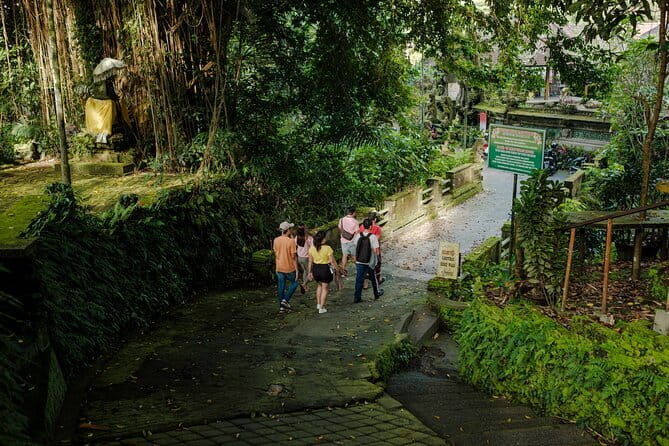
This tour stays around historic landmarks, which means the walking is not a smooth, flat stroll. Expect uneven temple stairs, steep gradients, and patchy sidewalks. The operator is very upfront about this, and they are right to be.
If you are steady on your feet, you will likely find it manageable. Still, I recommend treating it like a real walk, not a casual hangout. Bring breathable clothes, plan to hydrate, and keep a slower pace if you need it.
Timing also depends on weather. They operate rain or shine, but if there is an intense downpour, they will contact you before the start. You do not want to ignore this and show up in sandals that slide on wet stone.
Stop 1: Gunung Lebah Temple and the Big Picture of Hinduism in Bali
Gunung Lebah Temple is a strong opener because it sets context early. You start outside Ubud’s oldest temple, and the guide frames what you are seeing. You learn about the arrival of Hinduism in Bali, and you connect that to architectural features and community significance.
Why this works at the start: the rest of the walk is easier to understand once you have a cultural baseline. When you later see palace spaces and ritual references, you are not just looking at scenery. You are placing it inside a broader meaning.
What to watch for here is how temples function beyond religion as a shared community space. The guide’s job is to help you notice those details, not just point at them.
Possible drawback: temple areas can include stairs and uneven ground right from the start. If your legs are not used to climbing, go slow, grip handholds if available, and let the group match your pace.
Stop 2: Campuhan Ridge Walk and a Dutch Colonial Thread

Campuhan Ridge Walk adds a different texture to the day. You are moving from temple architecture to open-air scenery, and you get a look at how history can show up in unexpected places.
The stop includes a modest bridge with links to Dutch colonial-era history. The guide discusses the Dutch East India Company’s role in colonization and how Dutch influence shaped parts of the region.
You might be thinking, Do I really want colonial history on a nature walk? Here is the value: the ridge walk gives you a change of mood, and the historical angle gives you a clearer understanding of why places evolved the way they did. It turns a scenic pause into a learning moment.
What helps is the short timing. This is not a long detour. It is a focused segment so the walk keeps its rhythm.
If you get lightheaded easily, take a breather here. Ridge areas can feel exposed depending on heat and humidity, and wet conditions can make steps slick. The guide will keep moving, so you will need to plan your pace.
You can also read our reviews of more guided tours in Ubud



Stop 3: Museum Puri Lukisan and the Local-Western Art Story

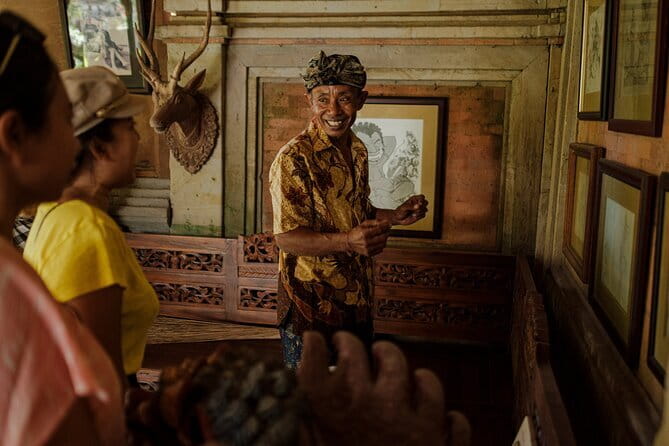
Museum Puri Lukisan is one of those stops that makes Ubud feel like more than temples and views. This museum is described as Ubud’s oldest art museum, and it focuses on a specific kind of collaboration.
You explore the important exchange between 20th-century Balinese and Western artists. The point is not just art appreciation as a standalone activity. The guide helps you understand how that creative cross-pollination helped shape Ubud’s reputation and what made the area a magnet for artists.
Entrance is included, and that is part of the value equation. If you like cultural context, this stop gives it. If you are not a museum person, you can still enjoy it because the guide frames what to notice as you move through.
One practical note: museums typically require a different shoe and pace than temple stairs. Keep your feet comfortable, because you may be standing and looking for a bit, not only walking.
Stop 4: Ubud Palace Courtyards and Cremation Ritual Context

Ubud Palace is where the tour shifts from art and nature back into social and ceremonial space. The focus is on the outer courtyards, and you learn about the historical and modern roles of Balinese royalty.
One detail that makes this stop more than architecture spotting is the discussion around traditional cremation rituals. You are not expected to have deep prior knowledge. The guide explains the place of these rites in Balinese life, and that makes the palace spaces feel purposeful rather than ornamental.
I like that this stop does not try to cram everything into one rushed walkthrough. With roughly 15 minutes allocated here, you get a manageable snapshot and enough guidance to understand why the space looks the way it does.
Possible drawback: if your interest is strictly in photo highlights, palace courtyards might feel a little “wait, what am I looking for?” until the guide points out what matters. So arrive with a curiosity mindset, and you will get more out of it.
Stop 5: Puri Kantor and Exclusive Compound Access
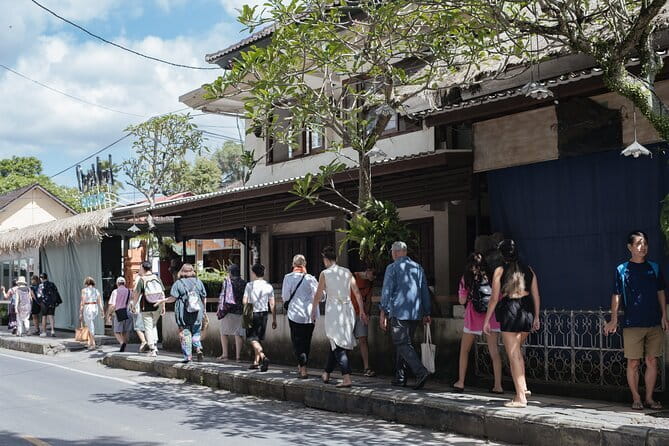
Puri Kantor is often the stop people remember because it goes beyond standard viewpoints. You get exclusive access to the palace of Tjokorde Gede Raka Sukawati, the Prince of Ubud. The guide also connects his influence to the shaping of Ubud and mentions his role as a co-founder of the Pitamaha Foundation.
This is where the tour starts feeling like a behind-the-scenes day. Instead of only looking at public spaces, you see what special access can teach you about hierarchy, tradition, and cultural stewardship.
Why this access matters: when you hear about foundations, roles, and community importance, it sticks because you are physically in the right type of place. The setting supports the story.
The practical thing to plan for is that this is also where the tour ends. Since the finish is at Puri Kantor, arrange your return to your base accordingly.
Price Check: Does $28.36 Feel Like Good Value?

At $28.36 per person, this tour can feel like a strong deal, mainly because you are not just paying for walking and a guide. Museum entry is included, plus other admissions along the route, and you get special access at Puri Kantor.
Museum Puri Lukisan has an entrance ticket listed at Rp 95,000, and that is part of what you are getting included. Even without converting it to dollars, it gives you a sense that the price is not only going toward guide time.
The other value piece is what you cannot easily put a receipt on: interpretation. A good guide helps you understand what you would otherwise miss, like why a temple’s features matter, how art exchanges affected Ubud’s reputation, and how colonial-era influences show up in everyday geography.
Also, the tour caps at 8 people. For solo travelers or small groups, that size can make the experience feel calmer and more interactive.
Guides, Storytelling, and Why Small Groups Matter
The most praised part of this tour is the guide experience. People frequently talk about guides who are funny, engaging, and quick to answer questions. Names that come up include Windari and Ira, and you might also encounter other hosts like Ilia or a guide referred to as Win.
What you should take from that, as a practical traveler, is this: the guide is not an afterthought. The tour is built around interpretation. If you ask questions, you are likely to get thoughtful answers that match your interests.
Small group size helps a lot with that. With fewer people, you are not hearing the guide from across a crowd. You can stop and look closer, and your questions are more likely to get real time.
And the tour style tends to feel personal, not scripted. If you like learning at a conversational speed, this setup fits.
What to Bring for a 3-Hour Walk in Ubud
Because the route includes temple stairs and patchy sidewalks, you need gear that handles uneven surfaces.
Bring:
- Comfortable walking shoes with grip
- A reusable water bottle, since the tour asks you to reduce plastic and suggests water refills
- Light rain protection, because it runs rain or shine
- A small towel or dry cloth if you sweat easily or get caught in a shower
Also, consider the physical demands as part of your plan. If you have mobility challenges, this might still be doable with careful pacing, but the tour description is clear that the walking includes steep and uneven parts.
Who This Tour Fits Best
This is a great match if you:
- Want a guided explanation of major Ubud culture sites
- Like mixing temples, art, and views in one outing
- Prefer a smaller group feel over big bus tours
- Value included admissions and special access
You might consider skipping or choosing a different format if:
- You cannot comfortably handle uneven temple stairs and steep gradients
- You prefer a totally flexible schedule with no walking-based structure
If you are traveling solo, it can still feel personal, because the group is small and the guide can keep the pace interactive.
Should You Book This Ubud Story Walk?
I think this is a smart first or second day in Ubud type of tour. It helps you understand the city quickly, and it gives you context that makes later wandering more meaningful. The combination of temples, Campuhan Ridge Walk, Museum Puri Lukisan, the Ubud Palace courtyards, and special access at Puri Kantor means you are not stuck doing one theme all afternoon.
Book it if you want guided storytelling with included admissions, a small-group vibe, and a deeper stop at a Balinese compound. Skip it if you know your feet do not handle uneven stone stairs well.
If you are on the fence, the deciding factor should be simple: are you comfortable walking for up to 3 hours on uneven ground? If yes, this tour is one of the best ways to get oriented and start seeing Ubud with understanding.
FAQ
How long is the Ubud guided walking tour?
The tour lasts about 3 hours.
Where do I meet the group, and where does it end?
You start at Cantina Rooftop Restaurant | UbudSayan in Ubud, and you end at Puri Kantor on Jl. Suweta No.1, Ubud.
What’s included in the price?
The tour includes a local English-speaking guide, an expert walking tour, museum entry to Museum Puri Lukisan, special access to a Balinese compound, and local discounts. An Indonesian guide may also be available.
Do I get pickup or drop-off from my hotel?
No. The tour does not provide pickup or drop-offs from accommodation.
Is the tour ticket available on my phone?
Yes, it uses a mobile ticket.
Does it run in the rain?
It operates rain or shine. If conditions are severe, such as an intense downpour, the operator will call you before the start.
Is it suitable for people with mobility issues?
The tour takes place around historic landmarks with uneven temple stairs, steep gradients, and patchy sidewalks. You should be physically capable of climbing steps and walking around an urban environment for up to 3 hours. Service animals are allowed.
More Walking Tours in Ubud




More Tours in Ubud





More Tour Reviews in Ubud



Not for you? Here's more nearby things to do in Ubud we have reviewed












Tour Reviews, compared.
 ★ 5.0All-Inclusive Ubud Private TourFrom $10014,344 reviews
 ★ 5.0Best of Ubud Full-Day Tour with Jungle SwingFrom $568,571 reviews
 ★ 5.0Monkey Forest, Jungle Swing, Rice Terrace, and Water TempleFrom $317,160 reviews
 ★ 5.0Best of Ubud 1-Day Private TourFrom $544,451 reviews
 ★ 4.4Bali: Ubud Palace Legong Dance Show TicketFrom $63,979 reviews
 ★ 5.0Uluwatu Sunset, Kecak Dance, and Dinner Jimbaran BeachFrom $353,681 reviews
 ★ 5.0Tanah Lot and North Bali Tour: Scenic JourneyFrom $1003,620 reviews
 ★ 5.0Body Massage Experience in Ubud Traditional SpaFrom $213,506 reviews
Browse the lists this tour appears in