
Tour review · TOUR REVIEWS
Myth of Pejeng Walking Tour
Some myths you can walk to.
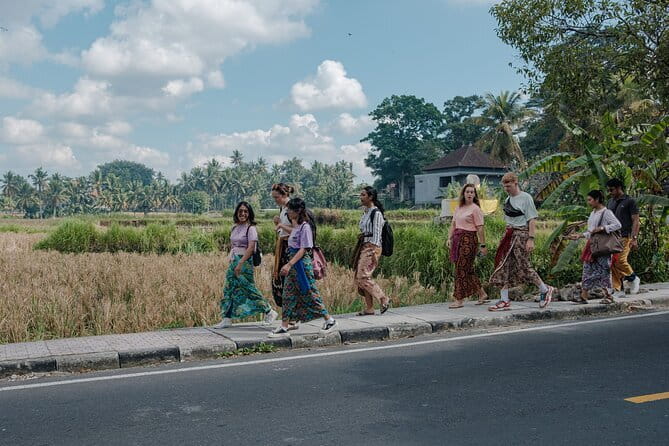
The Myth of Pejeng tour is a focused, small-group walk through sacred sites around Pejeng, where stories, ritual objects, and ancient remains come together in a way you can actually picture on foot. I like the tight 2-hour format and the way the route keeps you moving between meaningful places rather than parking you in one spot.
Two things I really like: you get special access to a Balinese compound and you’re not just sightseeing, you’re learning the why behind what you see, from moon and myth talk to temple-direction ideas at Kahyangan sites. The other big plus is practical pacing, with enough time at each stop for questions, plus coffee, tea, and a snack to keep you comfortable.
The main drawback is physical and footwear related. Uneven temple stairs, steep stretches, and patchy sidewalks are part of the deal, so you should be ready to climb and walk up to about 2 hours in an urban setting, even if it is “leisurely.”
Key highlights before you go
- Four specific stops that move from Hindu-era temples into a pre-Hindu archaeological courtyard
- Special compound access plus included temple donations
- Small group size (max 8), which makes questions easier to ask
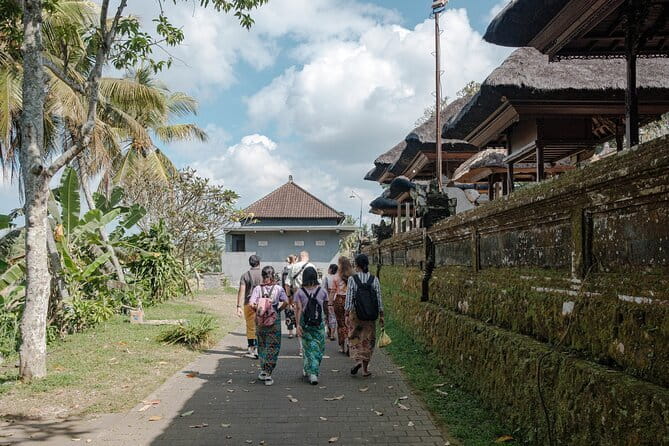
- Sarong and sash provided, so you do not have to shop for temple attire
- Coffee, tea, and a snack included, plus a suggestion to bring a refillable bottle
- Morning start near Pejeng for a calmer feel than central Ubud
Myth of Pejeng, the “walkable” way to understand Bali
This tour is built like a story told through places. You start the morning at Pejeng, then work your way through four stops that cover different eras and different types of sacred meaning. The format matters: with a small group and only a few stops, you spend time on context, not just photos.
At a practical level, it is also one of those tours where the price feels fair because the basics are handled for you. Sarongs are included, temple entry is built in, and you even get a small break with coffee, tea, and a snack. For $21.40, you are paying mainly for expert guidance and access, not for bus rides or long transfers you might resent on a short Bali day.
One more thing I appreciate is the tone the tour sets around respect and realism. Balinese temples are religious spaces, so you are guided on dress and conduct, and the tour is honest about walking conditions and weather.
You can also read our reviews of more walking tours in Ubud



How the morning walk actually feels between Pejeng stops
The itinerary is simple on paper, but the texture is what makes it work. You are moving between landmarks that are close enough to connect by foot, and each stop has a clear theme. You also get a guided rhythm: roughly 20 minutes at three temple locations, then a longer 30-minute stop at the archaeological courtyard.
Why this matters for you: in Bali, a “temple tour” can become repetitive fast if you only get surface captions. Here, the time per stop and the change of theme keep it from feeling like you are circling the same idea again and again.
Pace is also part of the value. This is listed around 2 hours, and one guide-led experience note you might hear in the group is that the walk can add up to a lot of steps even if it does not feel like a workout. Either way, I would plan for a morning walk on uneven ground. Wear shoes you trust on stone and stairs, and bring sun protection.
Stop 1: Pura Penataran Sasih and the bronze kettle drum story
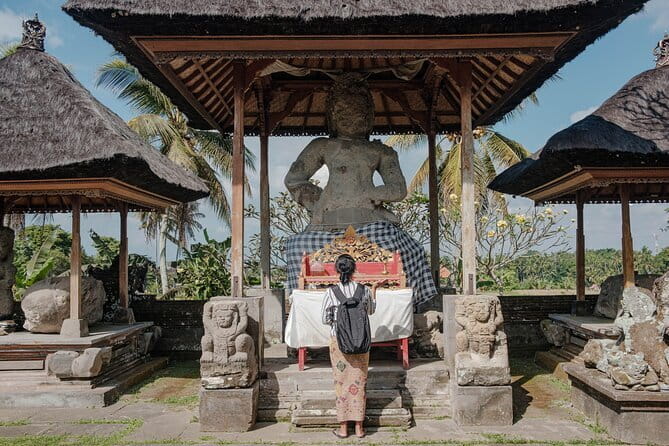
Your first stop is Pura Penataran Sasih, one of Bali’s older temples. You enter in the proper attire, with sarongs and sashes, and the standout detail is the special access to one of Southeast Asia’s largest bronze kettle drums.
This is where the tour earns its name in a tangible way. A kettle drum is not just an object to point at, it is a clue. The guide’s job is to translate local myth and practice into something you can understand, like why certain places become focal points for stories and ceremony. If you like learning how religion shows up as objects, architecture, and sound-related symbolism, this is a strong start.
What to watch for at this stop: temple spaces can mean more stairs or uneven steps than you expect. Even though you are not spending hours hiking, you will still need balance and good footing.
Stop 2: Pura Pusering Jagat, a Kahyangan temple concept at the center
Next you head to Pura Pusering Jagat, described as one of Bali’s six main Kahyangan temples, tied to the idea of the island’s center. This stop is less about one single artifact and more about structure and sacred geography.
For me, this is a great mid-tour checkpoint. Early on, you might be thinking in terms of stories. By the second temple, your brain shifts to patterns: how different temples connect to directional belief, and how sacred sites form a meaningful map. That makes the rest of the walk easier to follow.
Time is only about 20 minutes here, so it is not a slow museum visit. You will get guidance, but you should come with the mindset of learning the concept, not collecting every detail. If you tend to ask questions, this stop is a good time for it because it is concept heavy.
Stop 3: Kebo Edan Temple and the Bhairawa statue theories

Your third stop is Kebo Edan Temple, often called the Temple of the Crazy Buffalo. Here you look at a 13th-century Bhairawa statue that was recovered from nearby rice fields, and you talk through theories about where it came from and how unusual origins get explained.
This is my favorite kind of stop: the story has a clear mystery, and the guide helps you hold multiple ideas without turning it into guesswork you cannot enjoy. Statues found outside their expected context can feel like a puzzle, and Bali’s temple world often treats these puzzles as part of living tradition, not as something to erase.
Practical note: because it is still a small temple stop, you might find tighter walking areas. Take your time. Avoid rushing between points, especially if you are moving in sarong attire that needs a proper fit.





Stop 4: Arca Building Archaeological Museum and pre-Hindu sarcophagi
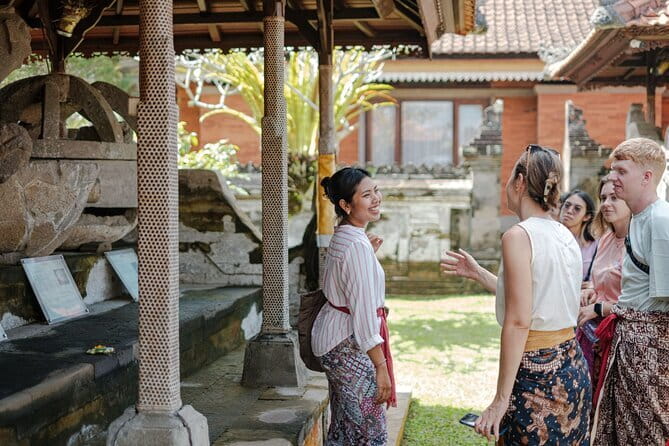
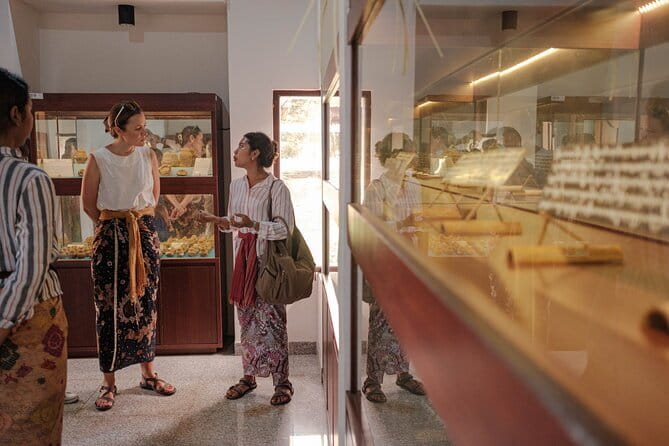
The final stop is the one that changes the time period: Arca Building Archaeological Museum. Instead of focusing only on Hindu-era temples, you step back into pre-Hindu Bali, and you explore giant sarcophagi in an open courtyard.
Why this ending works: it gives you contrast. After three stops tied to sacred structure and myth, the archaeological stop reminds you that people lived here long before those particular temples and stories took the forms you see today. It is a smart way to avoid leaving with only modern religious impressions.
What you might find memorable: the size of the sarcophagi and how the guide frames daily life and customs around pre-Hindu practices. If you like archaeology but hate tours that feel dry, this balance tends to work well.
This is also your longer stop, around 30 minutes, which helps because you may need extra time to process the objects and what they represent.
What you get for $21.40, and why it feels like value

At $21.40 per person, you are not just buying “a walk with a guide.” The tour includes several concrete items and costs that would add up if you tried to do it alone.
Here is what is included:
- Local English-speaking guide (and an Indonesian guide is available)
- Temple donations (Rp 60,000)
- Admission tickets at the included sites
- Balinese coffee, tea, and snack
- Sarong and sash
- Special access to a Balinese compound
If you are traveling with a short schedule, the big win is that many small frictions disappear. You do not have to figure out who to pay, where to dress, or which sites need extra permission. You just show up at the meeting point, accept the morning walk rhythm, and let the guide tie it all together.
Also, the group size is capped at 8 travelers, so you get more attention than you would on a crowded temple bus. If you care about asking follow-up questions, this matters.
Meeting point and timing: start at 8:30 am in Pejeng

The tour starts at 8:30 am at Indomaret Pejeng, Jl. Raya Dr. Ir. Sukarno No.552, Bedulu, Kec. Blahbatuh, Kabupaten Gianyar, Bali. It ends at Museum Arkeologi (near F7JV+563).
That early start is more than a time stamp. It helps you avoid the worst heat and gives you a calmer walk around Pejeng. One recurring tip from experienced participants is to go early enough to check out the local market nearby before the tour begins. If you like sniffing out local life beyond the main Ubud lanes, this is a smart add-on.
No pickup or drop-off is provided, so plan to make your own way to the start point and handle your own transport afterward.
Temple etiquette that keeps the day smooth (and respectful)
This tour has clear temple rules, and they are easy to follow if you prepare.
Both men and women are required to dress modestly, with a sarong that covers the legs below the knee. You can bring your own sarong or use one provided by the tour. Either way, you should plan to adjust fabric so it sits correctly before entering.
A helpful way to think about etiquette here: it is not just a checkbox. When you wear the right clothing and walk with patience, you tend to get better explanations from your guide. You also show that you understand temples are working spiritual spaces.
If you are the type who worries about doing it wrong, do not. The tour provides sarong and sash, and guides often help with getting the fit right, including practical items like sun and bug protection for people who need it.
Weather and walking conditions, what you should plan for
The tour runs rain or shine. If conditions become severe, like an intense downpour, the team calls you before the start time. This matters because it keeps the plan moving, while still protecting safety when weather turns ugly.
Walking conditions are also real. You can expect uneven temple stairs, steep gradients, and patchy sidewalks around historic landmarks. This is not a “stroller-friendly” itinerary. Bring shoes that grip, and go slow on stairs.
One more practical note: the tour encourages you to bring a reusable water bottle for refills to reduce plastic in Bali’s rivers. I like that approach because it is simple, and it also helps you stay comfortable during the walk.
Who this tour suits best, and who might want a different plan
This one fits best if you want:
- A small-group introduction to Bali temple culture
- A morning plan with a tight structure and clear stop themes
- Myth, religion, and archaeology mixed into one route
- Guides you can talk with and ask follow-up questions
It is also a good choice if you are based around Ubud but want something quieter than the most tourist-centered areas. Pejeng has a different feel, and the walk between stops tends to feel calmer than walking around the busiest Ubud core.
If you have mobility limits or you hate stairs, you may find the walking conditions challenging. The tour does say you should be physically capable of climbing steps and walking around for up to about 2 hours.
Should you book the Myth of Pejeng walking tour?
If your goal is an authentic, guided, value-heavy introduction to temple culture in Pejeng, I think it is an easy yes. The biggest reason is the combination: special access, included temple entries and donations, and a guide who ties together myth, ritual objects, and even pre-Hindu archaeology in a way that makes sense.
Book it especially if you like:
- Learning how sacred objects and temple geography connect to stories
- Asking questions and getting time to hear answers
- A morning walk that does not eat a full day
I would only hesitate if you know you struggle with uneven stairs and steep bits. In that case, look for a flatter, shorter alternative in Ubud.
If you can handle the ground and you want a thoughtful route with real context, this is the kind of tour that turns a myth into something you can actually see.
More Walking Tours in Ubud



More Tours in Ubud



More Tour Reviews in Ubud

Not for you? Here's more nearby things to do in Ubud we have reviewed












Tour Reviews, compared.
 ★ 5.0All-Inclusive Ubud Private TourFrom $10014,344 reviews
 ★ 5.0Best of Ubud Full-Day Tour with Jungle SwingFrom $568,571 reviews
 ★ 5.0Monkey Forest, Jungle Swing, Rice Terrace, and Water TempleFrom $317,160 reviews
 ★ 5.0Best of Ubud 1-Day Private TourFrom $544,451 reviews
 ★ 4.4Bali: Ubud Palace Legong Dance Show TicketFrom $63,979 reviews
 ★ 5.0Uluwatu Sunset, Kecak Dance, and Dinner Jimbaran BeachFrom $353,681 reviews
 ★ 5.0Tanah Lot and North Bali Tour: Scenic JourneyFrom $1003,620 reviews
 ★ 5.0Body Massage Experience in Ubud Traditional SpaFrom $213,506 reviews
Browse the lists this tour appears in