
Tour review · TOUR REVIEWS
Sidemen Trekking: A Walk from a Different Perspective
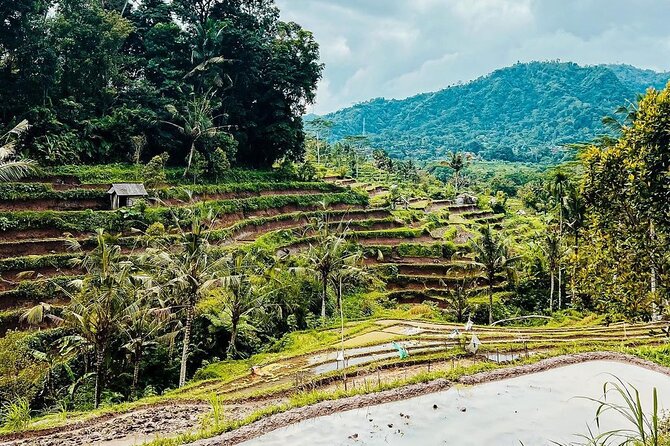
Rural Bali looks different when you hike it. This Sidemen trekking walk takes you from Pasar Sidemen into rice paddies and viewpoint spots with Mount Agung showing up behind real village life.
I love two things most. First, the scenery stays varied, rice terraces to village streets, with viewpoints that make the area feel big and lived in, not staged. Second, I like the small-group feel and the way guides such as Adi and Darya explain what you are actually seeing, from farming rhythms to everyday Hindu practices.
One caution: the walking paths can be narrow and slick in places, especially on terrace edges and irrigation footpaths. Bring proper shoes and expect a bit of balance work, not a stroll on a wide sidewalk.
Key highlights to know before you go
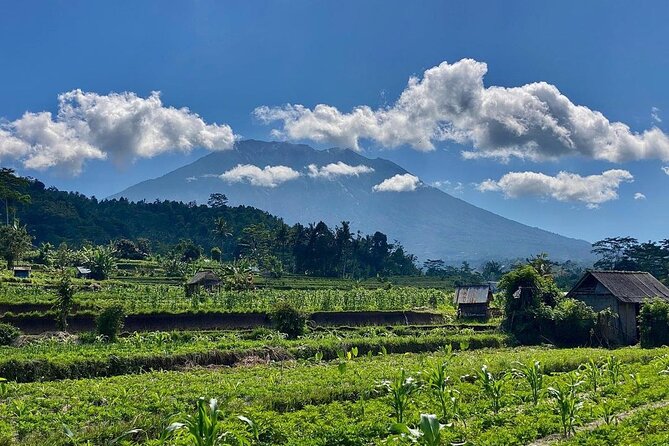
- Rice terrace viewpoints with Mount Agung behind them, not just generic panoramas
- Small groups (max 10) so your guide can answer questions and you are not stuck in a crowd
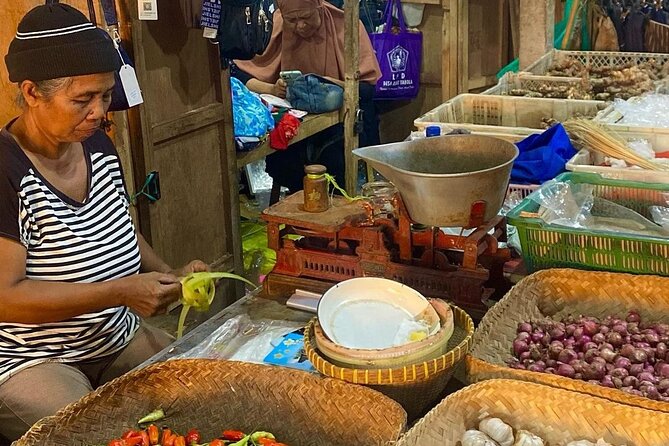
- Traditional market start, with an optional early visit if you go in the morning
- Irrigation-path walking plus a hanging wooden bridge that works for both people and motorbikes
- Local Hindu temple stops and rice-farming education during the walk
- Finish at Warung Ume Anyar, a solid place to cool down with a drink or meal afterward
Sidemen trekking: the calm you came for
If your Bali trip is feeling too theme-park-y, Sidemen is a smart reset. You trade the usual beach area vibe for a rural walk through rice terraces, irrigation channels, and small village streets. Even if you have seen photos of Bali before, you get a different sense of scale when you walk along the farmer paths.
The best part is how the views come in layers. You start in and around the traditional market area, then gradually move into the paddies where rice terraces spread out. In clear weather, Mount Agung becomes a constant background landmark, which makes stopping for photos feel worth it instead of rushed.
I also like that this is a guided experience focused on real daily life. You are not just chasing pretty scenery. You learn how rice cultivation fits into local routine, and you see religious elements like temple praying points that are woven into that same routine.
You can also read our reviews of more walking tours in Ubud

Where you meet in Sidemen (and how to find it fast)
You meet at Pasar Sidemen, the Sidemen Traditional Market area. The key detail: your meeting spot is the shop with the sign Upa Boga. It is close enough to the market that you can spot it if you arrive a little early.
If you are staying in Sidemen, plan your transport to reach the market meeting area. Grab can work in Bali, but here it is not as straightforward because pickup rules vary and there may be limited driver availability. Hotels sometimes allow drop-off only, so it is worth coordinating directly with your accommodation or arranging a local driver.
If you are staying around Ubud and doing this as a half-day outing, give yourself extra buffer time. The trek itself is short, but you still want the start to be smooth so you do not feel rushed when you get to the meeting point.
Market time: yes, you can go early
Pasar Sidemen is open from 5:00 AM to 10:00 AM, and you can add a short market look before your walk if you book a morning session. This is a nice option if you like watching early activity and seeing how ingredients and everyday supplies move through town before the day warms up.
If you arrive early, keep it simple. Scan the market, take a couple quick photos, then shift your focus back to the trek. The pace is relaxed, but the walking paths in the rice area do require attention.
The walk starts: from Sidemen streets to rice paddy paths
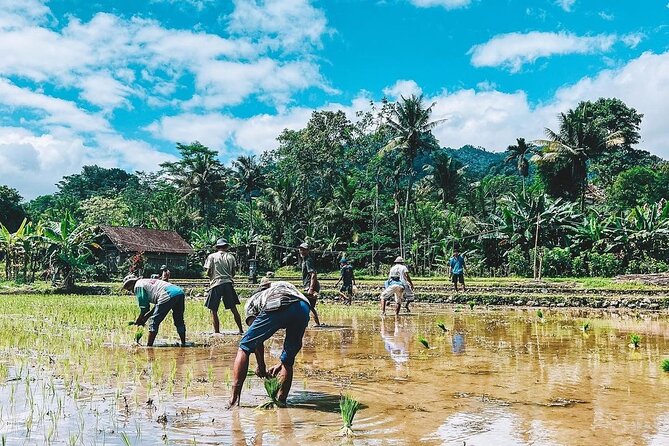
After meeting at Pasar Sidemen, the route moves from village life toward the rice paddies. You head up and down local streets at first, then transition to the farm area where the paths become smaller and more purposeful.
One theme you will notice right away is irrigation. The trek follows water systems, walking along routes where irrigation channels feed the fields. That matters because it explains why the paths are where they are. You are not just wandering around, you are moving with the logic of how the paddies are maintained.
The path choices can feel slightly hidden, since the best farmer routes are not always obvious at a glance. This is exactly why having a guide is valuable. They help you find the right side paths, and they know where it is safe to step and where the terrain changes.
The hanging wooden bridge: a memorable mid-trek landmark
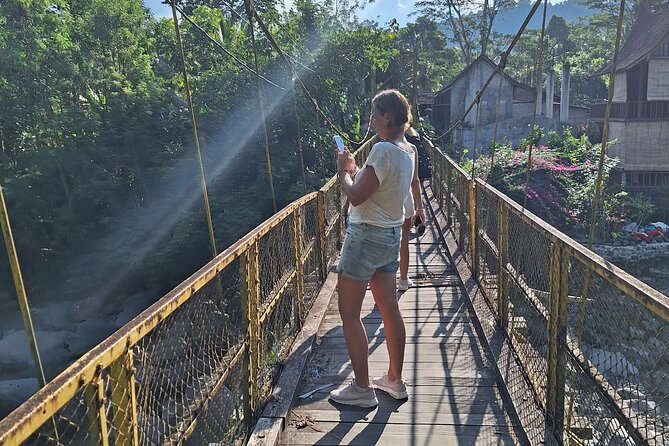
Halfway moments in this trek stick with you, and the hanging wooden bridge is one of them. The route takes you over a bridge that is sturdy enough for motorbikes and humans, which is reassuring when you are standing there with your heart doing a small hop.
It is a great photo spot, but also a good waypoint. Your guide will typically keep the story going as you cross, linking the engineering of water flow to the way the paddies function.
Bring your attention to your feet here. Even though it is built for regular use, it can still be bouncy underfoot like many wooden bridges in working rural areas.
You can also read our reviews of more hiking tours in Ubud


Rice farming and local religion, explained in plain terms

You spend real time in the rice fields and along farmer-used routes. This is where the tour earns its keep. A good guide can turn scenery into context, and the guides here often do exactly that.
You can expect to learn about:
- The rice farming process, including how cultivation changes with the season
- How local offerings relate to the Hindu faith practiced in the area
- The day-to-day role of farming in village life
One specific seasonal note from the experience: in December, you may see rice crops after harvest periods and hear how other crops are planted afterward. That timing can add an extra layer to the explanations, because you can connect what the guide says to what you are actually seeing.
You may also spot details that most people never notice, like the offerings flowers used in religious practice, and even unusual little neighbors around the fields. It sounds random until your guide explains how it all fits into the working ecosystem.
Terrain reality check: easy walk, still watch your step
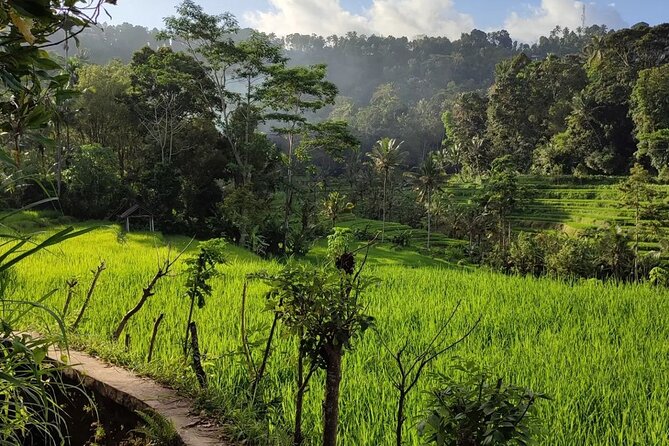
This is often described as an easy walk, but easy does not mean effortless. The terrain includes narrow, elevated sections and footpaths beside irrigation. Reviews also point out that parts can get slippery, so you need grip.
Here is what that means for you:
- You should be comfortable with uneven ground and occasional narrow sections
- You need balance more than speed
- Proper hiking boots or shoes are not optional if you want a stress-free walk
The trek also includes up and down street segments, so it is not totally flat. Still, it is designed for moderate physical fitness rather than hardcore hikers.
If you have knee problems, vertigo, or you are uncomfortable on narrow edges, I would think twice. The route can be manageable if you are steady on your feet, but the narrow terrace sections are a real factor.
Timing, pace, and what 2 hours feels like

The trek runs about 2 hours, with many plans recommending a finish around 2 to 2.5 hours after the start. That gives you enough time to do the walk and still grab a meal afterward without rushing your way into your next activity.
The route is not a single long grind. It is more like a sequence of short segments, viewpoints, and local stops, which helps the pace stay comfortable. Your guide also uses those pauses to explain what you are seeing.
Bring the right mindset: this is a guided walk with education and photo moments. If you expect a rugged mountain-style hike, you might be disappointed. But if you want a local perspective of rice fields and village life, it fits really well.
Where it ends: Warung Ume Anyar for the reset
The trek finishes at Warung Ume Anyar Restaurant in Ogang Village. This is a practical ending point because you are not stuck searching immediately after the walk. You can relax, cool off, and have a drink or meal.
It is also a helpful place to arrange your next transport. If you have a driver, plan pickup at the finish point about 2 to 2.5 hours after the trek starts. Grab can be limited here too, so having your ride lined up reduces waiting time.
If you accidentally miss the pickup plan, there is a backup option: walking back to the start point is about 3 km, roughly 30 to 40 minutes along the main road. That is not too far, but I would only treat it as a fallback.
Price and value: what $13.75 buys you
At $13.75 per person for about 2 hours, you are paying for a lot more than a route. You are paying for a local guide who can show you the terrace perspective and explain the day-to-day reality of Sidemen agriculture.
What you get included:
- Bottled water
What you should plan separately:
- Tips
- Hotel pick up and drop off
The fact that the group is capped at 10 adds real value. In small groups, you are less likely to feel like a number and more likely to hear explanations clearly, especially when the route heads onto smaller paths.
Also, the mobile ticket and group discount options can help if you are traveling with friends. Even without using those extras, the overall value is strong for a guided rural experience that feels far from the typical tour loop.
What to pack: the short list that matters on this trek
The experience asks for a few mandatory items because the path conditions and sun exposure are real factors.
Bring:
- Sun hat
- Hiking boots or shoes
- Suncream
- Sunglasses
That is the minimum. If you skip footwear and show up in sandals or slippery shoes, you will feel it on the terrace edges. If you skip sun protection, the Sidemen morning sun can still bite once you are out in open field areas.
A simple rule: treat this as a daytime countryside walk. You will be happier if your gear matches that.
Best fit: who will love this trek most
I think this trek is best for people who want rural Bali instead of another list of photo stops. If you like slow travel, talking with locals, and learning what makes agriculture tick here, Sidemen is made for that.
It also fits well for:
- Couples and solo travelers who want a guided experience without a long day
- People staying near Ubud who want something short, grounded, and different
- Anyone who enjoys walking paths that locals actually use
If you are elderly or less confident on narrow, elevated sections, you might find it challenging, even if the route is not called a hard hike.
Should you book Sidemen trekking?
Yes, you should book it if you want a short walk that gives you genuine context. You get rice terrace viewpoints, village-and-temple stops, and a guide who can turn the setting into a story you can remember. The price is low enough that it feels like a smart use of time, not a big commitment gamble.
Skip it or choose your pace carefully if you hate uneven ground, have trouble with balance, or you want a wide, easy path experience. This trek is easy in duration and effort level for most people, but the terrain still asks you to pay attention.
If your goal is to see Sidemen from a different perspective, this one delivers.
More Hiking & Trekking Tours in Ubud

More Walking Tours in Ubud


More Tour Reviews in Ubud




Not for you? Here's more nearby things to do in Ubud we have reviewed





Tour Reviews, compared.
 ★ 5.0All-Inclusive Ubud Private TourFrom $10014,344 reviews
 ★ 5.0Best of Ubud Full-Day Tour with Jungle SwingFrom $568,571 reviews
 ★ 5.0Monkey Forest, Jungle Swing, Rice Terrace, and Water TempleFrom $317,160 reviews
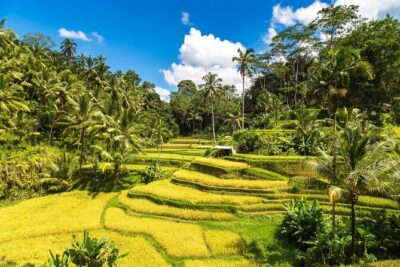 ★ 5.0Best of Ubud 1-Day Private TourFrom $544,451 reviews
 ★ 4.4Bali: Ubud Palace Legong Dance Show TicketFrom $63,979 reviews
 ★ 5.0Uluwatu Sunset, Kecak Dance, and Dinner Jimbaran BeachFrom $353,681 reviews
 ★ 5.0Tanah Lot and North Bali Tour: Scenic JourneyFrom $1003,620 reviews
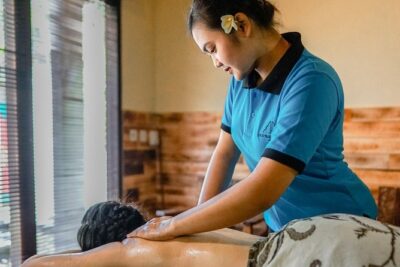 ★ 5.0Body Massage Experience in Ubud Traditional SpaFrom $213,506 reviews
Browse the lists this tour appears in