
Tour review · TOUR REVIEWS
PRIVATE Authentic Balinese Cooking Class in Ubud at Putu’s Home
Putu’s kitchen feels like family. This private Balinese cooking class in Ubud pairs real farm ingredients with hands-on cooking, plus stories from a multigenerational household. I like that you cook for a real Balinese feast, not a demo show.
You’ll also love the way this class is built around practical technique. Expect spice work, chopping, and cooking in a home setup, where the flavors come from what the family grows and makes themselves.
One consideration: the kitchen setting is simple, and the cooking happens a bit outside town. If you have tight timing, build in extra buffer for the drive.
Key things to know before you go
- Door-to-door private transport from Ubud is included, which makes this easy to fit into your day.
- Five dishes, hands-on: you’ll prepare a full set of foods, not just taste a few bites.
- Farm-to-table ingredients: many items come from Putu’s own garden and family farming.
- Lunch or dinner choice lets you pick the rhythm that suits your schedule.
- Local alcohol included (1 to 2 glasses), with non-alcoholic drinks available too.
- Vegetarian and vegan options are available if you request them when booking.
Putu’s home class is about cooking, not performing
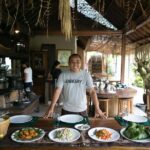
Ubud has plenty of cooking classes, but this one hits different because it happens in a family compound. You get welcomed by Putu and her multigenerational household, including grandparents, her husband, and children. That matters, because the class isn’t only about recipes. It’s about how a Balinese home works, how food connects to daily life, and why certain ingredients matter.
I like that the experience is clearly private. You are not stuck in a classroom where you watch someone else work. You’ll have time to chop, grind, cook, and ask questions. And because it’s family-led, the explanations tend to be personal and practical, like why a spice blend is used, or how traditional ingredients are understood beyond taste.
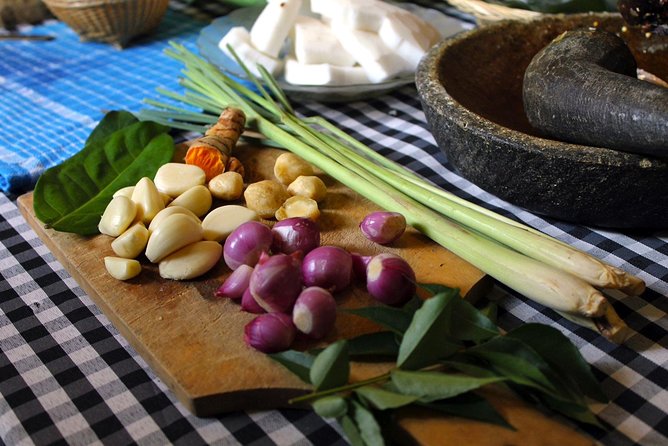
Another reason this stands out is the built-in sense of place. You’re not just eating a meal, you’re learning how the meal gets made, starting from what’s grown on the property. That farm connection is more than a marketing line. It changes how the cooking feels, because you’re handling ingredients that the family harvests.
You can also read our reviews of more private tours in Ubud

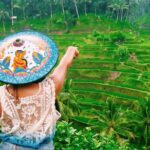
Getting there from Ubud: pickup is included, but plan for the drive
The experience includes round-trip transport from Ubud hotel. Your pickup and drop-off are part of the package, which is a big convenience when you’re already juggling temple visits, rice terraces, and traffic.
The only thing to watch is distance. Some classes run about 40 minutes from Ubud center. That’s not a dealbreaker, but it can affect your evening plans if you book a dinner slot. If you’re trying to catch a show or have a reservation right after, I’d keep some breathing room.
In terms of how the day starts, you’ll be met for pickup arranged through the tour partner and then taken to Putu’s home in the ancestral village area. Once you arrive, you’re not dropped off at a studio. You’re brought into the family space, which sets the tone for the whole lesson.
Before the stove: garden, rice, and the Balinese home layout
A good cooking class teaches technique. A great one teaches context. Here, Putu brings you through the environment around the kitchen first, including the family’s growing areas and parts of the traditional compound.
You can expect a walk that points out produce and farming practices tied to the meal. A recurring theme is that the ingredients you use often come straight from the family’s garden and farm. That includes rice, fruit, and produce tended by Putu’s grandparents.
You’ll also learn about the traditional layout of a Balinese Hindu home. Putu explains the significance of different sections and how the compound connects to daily life and ritual. This is where the experience becomes more than “how do I make this dish.” You start to see why certain foods show up in meals, and why ingredients carry meanings in traditional practice.
A detail I appreciate: Putu is described as humorous and relaxed in her teaching style. That matters when you’re in a home setting and the schedule moves at a human pace. You’re more likely to ask questions, and you’re less likely to feel rushed.
The cooking portion: a five-dish session with real spice work
The cooking class runs about 1.5 hours, and the full experience totals about 3 hours including travel and the meal. You’ll cook as a group with your host and family, and the menu can vary seasonally.
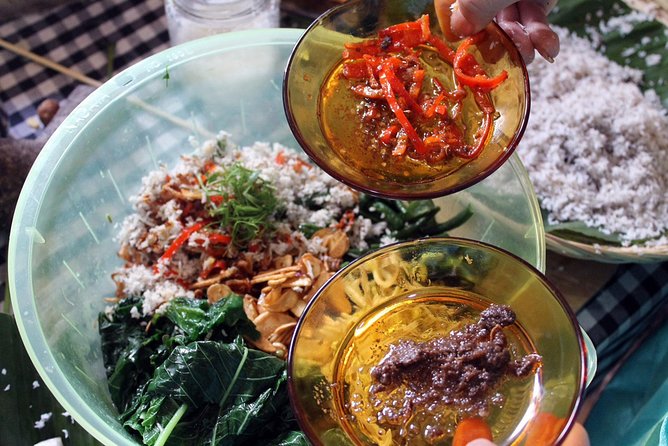
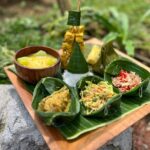
The class focuses on authentic Balinese dishes. Based on what’s been taught in past menus, you might prepare foods like grilled fish, banana leaf parcels, or curry. You’ll work through roughly five dishes, and the emphasis is hands-on: chopping, grinding, grilling, and seasoning.
What the lesson is really teaching you
Most cooking classes teach steps. This one also teaches how to think with flavor.
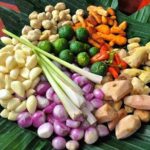
You’ll hear about the spices Putu uses and how she combines them. A big part of the instruction is that Balinese flavor is built through layers: spice selection, how it’s ground or mixed, and how it’s cooked. You’re not just memorizing a list. You’re learning the logic.
You’ll also get stories tied to family recipes. Putu shares background on her household’s cooking habits and the reason certain ingredients show up. The class also includes traditional Balinese medicines that Putu makes, with talk about healing properties of certain ingredients. Even if you don’t treat it like medicine, it adds meaning to what you’re eating, because the same ingredient can show up in both food and traditional practice.
You can also read our reviews of more cooking classes in Ubud
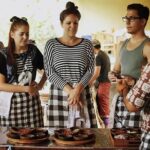
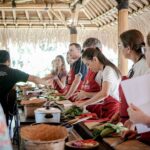
Expect home-kitchen methods, not industrial shortcuts
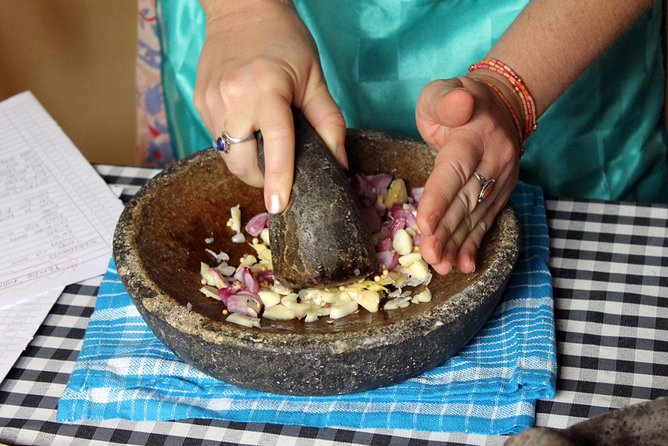
The kitchen setup can be simple. Some descriptions note an outdoor cooking area and a basic cooktop, with lots of food prep happening right where you can see it. You may work with traditional methods like steaming rice over a wood-burning stove, grinding ingredients by hand, and chopping on wood blocks with small cleavers.
That sounds rustic, but it’s practical. You get to understand texture and timing, like why a spice paste thickens when cooked, or how banana leaf wrapping changes aroma and moisture. If you’re the kind of person who likes to learn by doing, you’ll feel right at home here.
Spice level and comfort
You should be able to adjust spice levels if you want. Several accounts describe the host being patient and allowing choices. Still, do tell Putu your comfort level early, especially if you avoid chilies or have dietary restrictions.
The feast afterward: you eat what you make, with local drinks
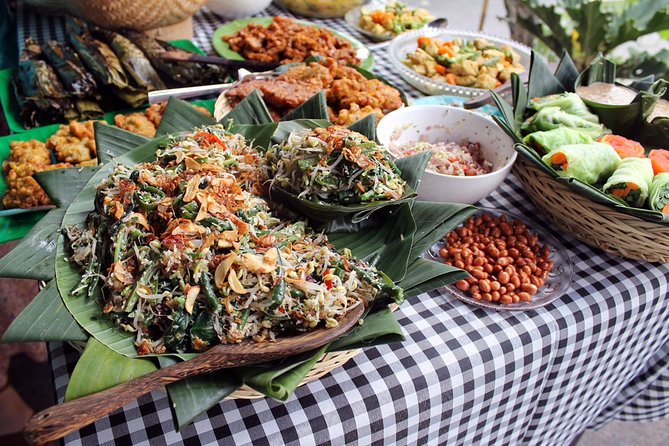
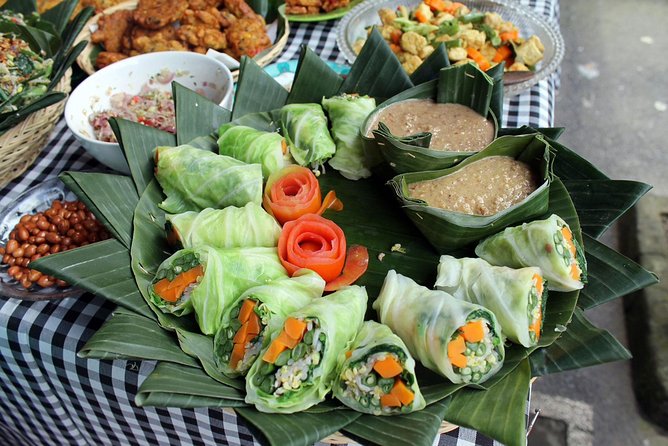
After the cooking part, you sit down for a shared meal of everything you prepared. This is one of the best parts of the experience, because it’s not a rushed “taste and go.” The structure supports actually eating, talking, and asking follow-up questions.
The meal is described as a Balinese feast with multiple dishes and enough food for a satisfying session. People also note leftovers, and you may get leftovers to take away. That’s a real advantage in Bali, where you often eat out late and wind up paying restaurant prices again the next day.
Alcohol and drinks
A small amount of local alcohol is included, typically 1 to 2 glasses. Non-alcoholic beverages are included too. If you don’t drink, you can still enjoy the meal without pressure, but it’s smart to mention preferences when you book.
Recipes to take home
One of the nicest practical perks is that Putu shares recipes afterward, described as a recipe book or her recipes to take home. That’s what turns your experience into something you can recreate later, and it helps if you want to remember dish names and flavor balances beyond the day itself.
Lunch vs dinner in Ubud: picking the best time for your trip
You can choose between lunch or dinner classes. This is more than convenience. It changes how the day feels.
A lunch class can work well if you want a cultural activity earlier in the day, then still have energy for markets, waterfalls, or a relaxed evening. Dinner can feel special if you like Bali’s nighttime vibe and want the meal to be the main event, rather than lunch competing with other plans.
The dinner option can also mean you’ll be cooking and then eating after dark. One review notes that the setup is well lit after sunset, so you should not feel like you’re stumbling around in the dark. Still, if you’re sensitive to night transport and traffic, a lunch booking may be the calmer choice.
Value and price: why $75 per person often makes sense
At $75 per person, this class can be a strong value, especially because it includes a lot that other cooking experiences charge extra for.
You get:
- Private cooking lesson and the homecooked meal
- Local alcohol (1 to 2 glasses)
- Non-alcoholic beverages
- Round-trip transport from Ubud hotels
- Taxes and handling fees
- Gratuities
That last line matters. Restaurant dinners in Ubud can easily add up, and cooking classes often do not include a full meal that’s the same quality as what you make. Here, you’re cooking for real, then eating the result. You’re also paying for time with a host who explains culture, spices, and home life, not just plating a snack.
One more value point: the class is private, so you’re not paying for “one instructor, many strangers.” Even if you book as a small group, it’s still your experience.
If you’re staying outside Ubud, keep in mind that transportation from outside Ubud is an extra charge. The package is designed around pickup from Ubud.
Who should book this cooking class in Putu’s home
This experience fits best if you want authenticity without fuss. If you like learning from someone’s actual family routine, you’ll enjoy the home setting, the temple stories, and the garden ingredients.
It’s also a great match for:
- Food lovers who want technique, not just tasting
- Travelers who prefer a small, personal activity over big group tours
- Groups with different ages and cooking comfort levels, since Putu’s teaching style is described as patient and inclusive
If you prefer highly polished, studio-style environments with predictable “show and tell” pacing, you might find the home-kitchen setting different from what you expect. The kitchen is described as simple, and the cooking happens in a natural home compound setting, not a commercial restaurant kitchen.
Final call: should you book Putu’s private Balinese cooking class?
I’d book it if you want more than a recipe. This class gives you a story you can taste: spices explained in context, food made with garden ingredients, and a family compound meal you eat together.
Book it especially if:
- You’re in Ubud and want an included private pickup and drop-off
- You want to cook multiple dishes, around five, and then eat them
- You care about farm ingredients and traditional Balinese household life
Skip it or reconsider if:
- Your schedule is extremely tight and you can’t absorb the drive time from central Ubud
- You strongly prefer indoor, restaurant-style kitchens with fixed equipment and lighting
If you’re on the fence, I’d treat this as a Bali “do once” cultural food experience. It’s one of the few activities where the location, the cooking, and the meal feel like one continuous event.
FAQ
How long is the cooking class?
The cooking class lasts about 1.5 hours, and the total experience is approximately 3 hours including pickup, travel, and the meal.
What dishes will I cook?
You’ll prepare about five authentic Balinese dishes. The exact menu can vary by season, but options may include grilled fish, banana leaf parcels, or curry.
Is lunch or dinner offered?
Yes. You can choose between a lunch class or a dinner class to match your schedule.
Do you include pickup from Ubud?
Yes. Round-trip transport from your Ubud hotel is included. If you are staying outside Ubud, there is an additional transportation charge.
Is the tour private?
Yes. It’s a private experience, and only your group participates.
Is local alcohol included?
Local alcohol is included, typically 1 to 2 glasses. Non-alcoholic beverages are included as well.
Are vegetarian or vegan options available?
Yes. Vegetarian and vegan options are available if you request them when booking.
Can the class accommodate allergies or dietary needs?
You should advise at the time of booking about allergies, dietary restrictions, or cooking preferences so Putu can plan the menu.
What does the price include?
The price includes the private cooking lesson, homecooked meal, local alcohol (1 to 2 glasses), non-alcoholic beverages, round-trip transport from Ubud hotels, taxes and fees, and gratuities.
More Cooking Classes in Ubud
More Private Tours in Ubud

More Tour Reviews in Ubud




Not for you? Here's more nearby things to do in Ubud we have reviewed








Tour Reviews, compared.
 ★ 5.0All-Inclusive Ubud Private TourFrom $10014,344 reviews
 ★ 5.0Best of Ubud Full-Day Tour with Jungle SwingFrom $568,571 reviews
 ★ 5.0Monkey Forest, Jungle Swing, Rice Terrace, and Water TempleFrom $317,160 reviews
 ★ 5.0Best of Ubud 1-Day Private TourFrom $544,451 reviews
 ★ 4.4Bali: Ubud Palace Legong Dance Show TicketFrom $63,979 reviews
 ★ 5.0Uluwatu Sunset, Kecak Dance, and Dinner Jimbaran BeachFrom $353,681 reviews
 ★ 5.0Tanah Lot and North Bali Tour: Scenic JourneyFrom $1003,620 reviews
 ★ 5.0Body Massage Experience in Ubud Traditional SpaFrom $213,506 reviews
Browse the lists this tour appears in