
Tour review · TOUR REVIEWS
Ubud Shamanic Healing and Purification Ceremony
A sacred reset in Ubud starts with ritual. This Ubud shamanic healing and purification ceremony takes you from a traditional balian healer session into a holy-water blessing at Mengening Temple, where spirituality meets a very practical self-cleaning routine.
I like that it is set up as a private experience for your group, so you are not squeezed into someone else’s pace. I also like that the flow is guided step by step, including the healer visit and the holy spring bathing part, so you know what is happening even if you are new to Bali’s spiritual side.
One consideration: the Mengening Temple bathing area involves stairs, and one guest needed help because walking up and down was very difficult for an older person with a slight disability. If stairs are a problem for you, tell your provider up front so they can suggest the option with fewer stairs.
Key things to know before you go
- A balian healer session in Ubud focuses on traditional spiritual healing, using rituals, prayers, herbal remedies, and sometimes chanting or meditation.
- Mengening Temple melukat is a self-cleaning ritual with holy water, done in natural springs that date back to the 11th century.
- Separate bathing pools are used for women and men, with the pool experience supported by offering and prayer.
- Tirtha holy water is connected to Hindu ceremonial requests, not just sightseeing.
- Private transportation with bottled water helps the day feel calm and organized from start to finish.
- Plan for stairs at the temple, and ask about lower-stair routes if mobility is limited.
What the Ubud ceremony is really about
This experience is built around two connected ideas. First, you sit with a respected Balinese healer, a balian, who performs spiritual healing rituals. Second, you go to Mengening Temple for melukat, a purification moment using holy water from natural springs.
You are not just being taken to a pretty temple. You are guided through a belief-based process that includes prayer, offerings, and bathing. That is why the day feels less like a tour and more like a structured cultural visit where you follow the steps in order.
Money-wise, the price is straightforward at $50 per person. What makes it feel like value is what you do get bundled in: private transport, bottled water, and entrance fees or tickets. Lunch is not included, so you’ll want to plan for a meal after the ritual, but the main costs are covered.
The day starts at 8:30am in Ubud, and you return back to your starting point. Total time is listed as 1 to 10 hours depending on scheduling and how the day flows, but each main stop is around an hour.
You can also read our reviews of more tours and experiences in Ubud.

Step 1 in Ubud: meeting a balian healer
The Ubud portion is centered on Balinese shamanic healing, practiced through a blend of animism, Hindu belief, and traditional healing practices. The healer is called a balian. In this setting, the balian is viewed as someone with a special connection to the spirit world, which is why diagnosis and treatment can be spiritual as well as symbolic.
During the healing process, you can expect a mix of rituals and prayers. Traditional herbal remedies may be part of the session. Chanting or meditation may be used, and in some cases the healer’s process can include trance-like states. You might also see tools like talismans, crystals, and other symbolic objects used as part of the ceremony.
What this means for you on the ground: the healer visit is not a quick talk. It is an active ritual. Even if you are not fluent in the religious language, your job is basically to show respect, follow the guidance, and stay present.
This is also where you will feel the difference between a random attraction and a properly guided experience. The driver-guide service is often praised for keeping things clear and comfortable. In one highlighted case, the driver-guide Tude was described as conversational and very informative, and as someone who made people feel at ease while explaining what to do. That kind of support matters because the healer visit is spiritual and unfamiliar for many first-timers.
If you want this to feel meaningful, come with one clear intention. You can treat the session as a time for mental reset, physical comfort, or both. Just keep your expectations grounded: this is traditional spiritual healing, not a medical appointment.
Step 2 at Mengening Temple: melukat in the sacred springs
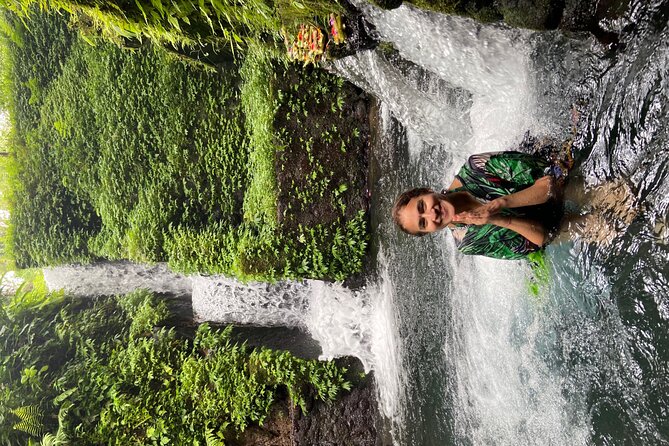
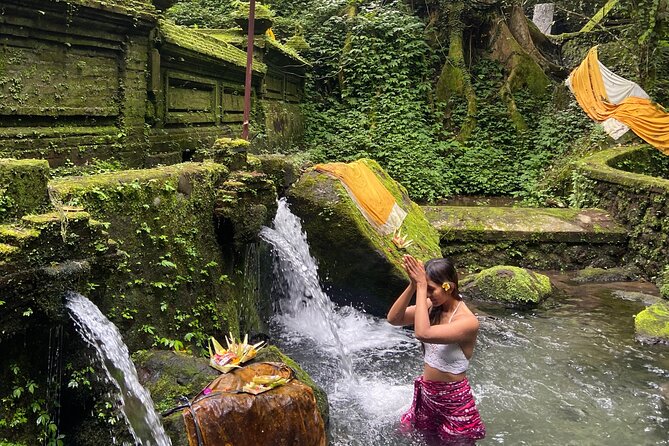
Then you head to Pura Mengening, a holy spring temple located in the village of Saraseda, in Tampaksiring, Gianyar regency. The temple area is described as cool and surrounded by natural scenery. That matters because the ritual itself is bodily. You will be entering cold, clear water as part of the self-cleaning process.
This stop is dedicated to melukat, meaning self-cleaning with holy water. It is also a place to request tirtha, which is holy water used in Hindu ceremonies. In other words, the temple is tied to real religious practice, not just a tourist-friendly photo op.
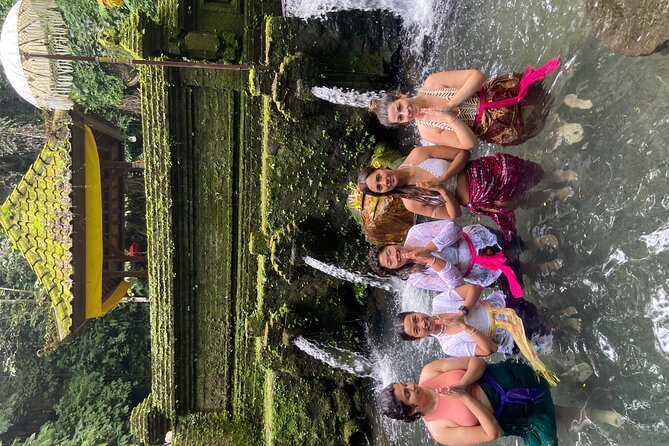
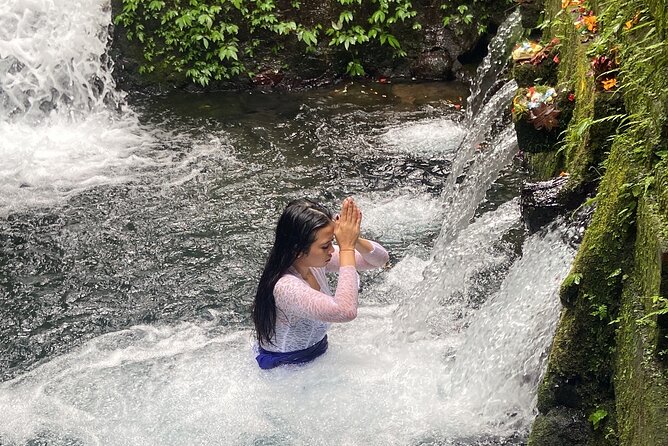
Inside the bath area, there is a pool for self-cleaning, divided into two sections. One pool is for women, and one separate pool is for men. The springs are described as natural sources that have existed since the 11th century, and the water is said to be cool and clear.
The process includes offering and prayer. You are expected to present canang and incense before bathing, then pray for the coolness given physically and spiritually. Even if you are not sure how long you should pray, the structure is the point. Your guide helps you follow what’s expected, and your role is to participate respectfully.
The stairs reality check
Here is the one part you cannot ignore. The bathing area includes a lot of stairs to walk up and down. One guest specifically called out this challenge for an older person with a slight disability, and the provider response included that they usually can offer another option with less stairs if needed.
So if you have knee issues, balance issues, or you just know you will be uncomfortable with steep steps, speak up early. Ask for the stair-light option. If you can’t do stairs at all, this might not be the right choice, because the temple ritual is tied to that setting.
Timing and logistics: a calm start with round-trip transport
The ceremony day begins at 8:30am in Ubud, and it ends back at the meeting point. That round-trip structure is helpful because you avoid the stress of coordinating transport at two different locations.
Private transportation is included, and bottled water is provided. That combination matters in Bali because it helps you stay relaxed and focused during a day that is partly spiritual and partly physical. You do not want dehydration or heat fatigue to become the main story of your purification ritual.
Also, this is a private tour/activity, meaning only your group participates. That is a big deal if you want the healer session to feel like your moment, not a show you share with strangers who might be late, loud, or distracted.
The experience is also listed as requiring good weather. If weather is poor, it can be canceled and you can choose a different date or get a full refund. For you, that means you should keep some flexibility in your plans during Ubud. If you booked this on a tightly scheduled day, you might want a backup activity nearby.

What’s included, what’s not, and how that affects your day
You get these inclusions: private transportation, bottled water, and entrance fees or tickets.
Lunch is not included. That’s a simple gap, but it affects how you pace your day. If the healing and bathing take the full stretch of the time window, you can end up hungry afterward. Plan on eating soon after you return, or grab something earlier before the 8:30am start, if your schedule allows.
One more practical note: your start and end are the same meeting point in Ubud. That reduces decision fatigue. You do not need to figure out where to go next. The day is structured for you.
Price and value: does $50 feel fair?
At $50 per person, this is not trying to be a bargain-basement activity, and it is not positioned as a high-end luxury retreat either. It sits in the middle. The value comes from the bundle. You get the healer visit plus the temple purification components, with transport and entrance fees covered.
If you were to pay separately for transport, temple access, and a guided day plan, the math could get more expensive quickly. Here, those core costs are already included.
Two small cost considerations for you:
- Lunch is not included, so budget for food on your own.
- The day can involve physical stair walking, so plan with comfort in mind.
There is also group discounting listed, plus the experience is commonly booked about 25 days in advance on average. That suggests the best value might come from booking soon after you lock in your Ubud dates, especially if you are traveling during busier periods.
Comfort, expectations, and how to participate respectfully
This experience is both mental and physical, but in a specific way. The balian healer work is designed around rituals, prayers, and spiritual healing concepts. The body part comes at Mengening Temple, where you bathe in cool holy water as part of melukat.
For you, the easiest way to get the most out of it is to arrive with a respectful, open mindset. You are stepping into a religious setting where the steps matter. If you treat it like a casual attraction, it can feel like a performance. If you treat it like a guided ritual, it tends to feel more coherent.
It also helps to understand the language of the experience, at least lightly. Melukat is self-cleaning with holy water. Tirtha is the holy water connected to ceremonies. Those terms explain why the temple is doing more than just letting people bathe.
Finally, the service is part of the value. The experience is praised for comfort and clear guidance. When someone like Tude is described as making guests feel comfortable and explaining exactly what to do, that removes a lot of uncertainty. In a ritual setting, fewer surprises is a form of kindness.
Who should book this Ubud shamanic healing ceremony
This tour is a strong match if you want:
- A structured Balinese spirituality experience with both a healer session and a purification temple
- Private group time, so you can move at your pace and feel more personal in the ritual
- A day that blends mental reset with a tangible physical element
- Easy planning, because transportation and key entrance costs are already handled
It may be less suitable if:
- You have limited mobility and stairs are a major issue. Ask for lower-stair arrangements early.
- You want something purely informational or purely sightseeing. This is participation-based and ritual-based.
Should you book Ubud Shamanic Healing and Purification
I’d book it if you are curious about Bali’s living spiritual traditions and you like experiences that are guided, structured, and respectful. The biggest strengths are the combination of the balian healer session and Mengening Temple purification, plus the practical package that includes private transportation and entrance fees.
I’d think twice before booking if stairs would be a deal breaker. The stairs at Mengening are real, and while the provider indicates other options are usually available when stairs don’t work, you should confirm that clearly before you go.
One more confidence boost: the overall feedback score is very high, with a 4.9 rating and 97% recommended. People specifically highlight how spiritual the day feels and how comfortable the guidance makes the unfamiliar parts.
If you want a Bali experience that’s not just temples for photos, this is a solid pick, especially if you can handle the holy water bathing setup with a little staircase effort.
FAQ
What does the Ubud shamanic healing and purification ceremony include?
It includes private transportation, bottled water, and entrance fees or tickets. Lunch is not included.
Where does the purification part happen?
The holy water blessing and bathing are at Mengening Temple, a holy spring temple in the area of Saraseda, Tampaksiring, Gianyar regency.
What is the main activity at Mengening Temple?
The temple is associated with melukat, self-cleaning with holy water. The water is from natural springs, and the bathing area includes a pool for self-cleaning.
Are the bathing pools separated by gender?
Yes. The pool area is described as divided into women’s and men’s baths, with separate pools.
How long does the tour take?
It is listed as 1 to 10 hours approximately. The two main stops are each around 1 hour, with additional time for travel.
Is pickup available?
Pickup is offered, and round-trip transportation is included.
Is the tour suitable for everyone?
Most travelers can participate, and it is described as near public transportation. However, Mengening Temple involves stairs, which can be difficult for people with mobility challenges.
More Tour Reviews in Ubud
Not for you? Here's more nearby things to do in Ubud we have reviewed





Tour Reviews, compared.
 ★ 5.0All-Inclusive Ubud Private TourFrom $10014,344 reviews
 ★ 5.0Best of Ubud Full-Day Tour with Jungle SwingFrom $568,571 reviews
 ★ 5.0Monkey Forest, Jungle Swing, Rice Terrace, and Water TempleFrom $317,160 reviews
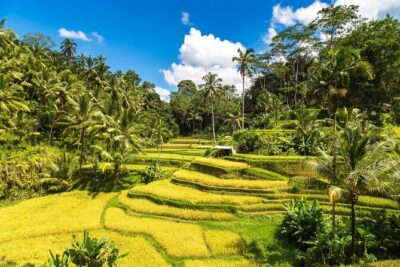 ★ 5.0Best of Ubud 1-Day Private TourFrom $544,451 reviews
 ★ 4.4Bali: Ubud Palace Legong Dance Show TicketFrom $63,979 reviews
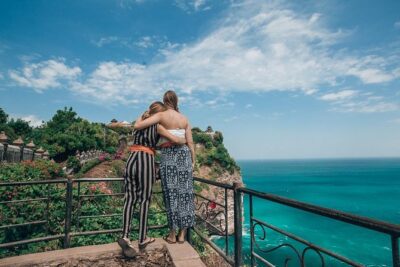 ★ 5.0Uluwatu Sunset, Kecak Dance, and Dinner Jimbaran BeachFrom $353,681 reviews
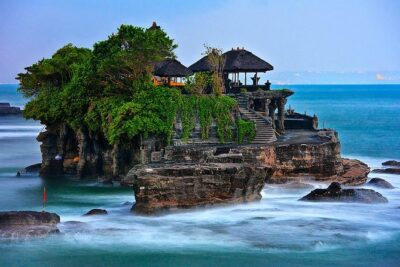 ★ 5.0Tanah Lot and North Bali Tour: Scenic JourneyFrom $1003,620 reviews
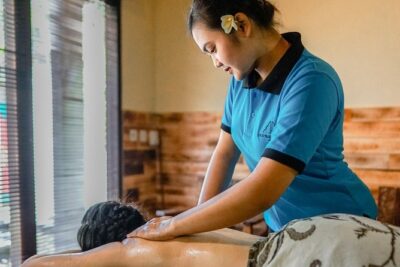 ★ 5.0Body Massage Experience in Ubud Traditional SpaFrom $213,506 reviews