
Tour review · TOUR REVIEWS
Purification Holy Bath at Beji Gria Waterfall
Balinese purification hits different.
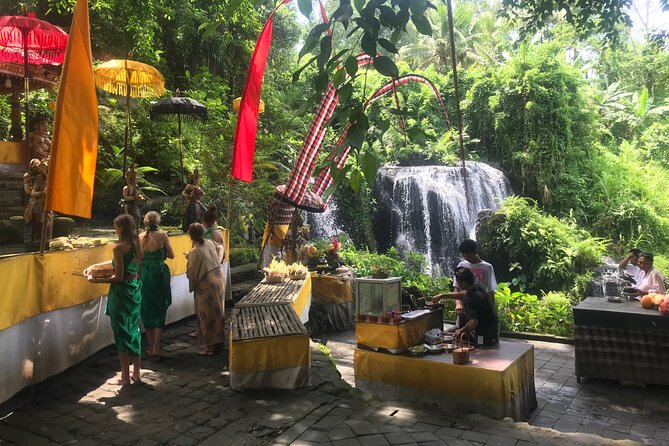
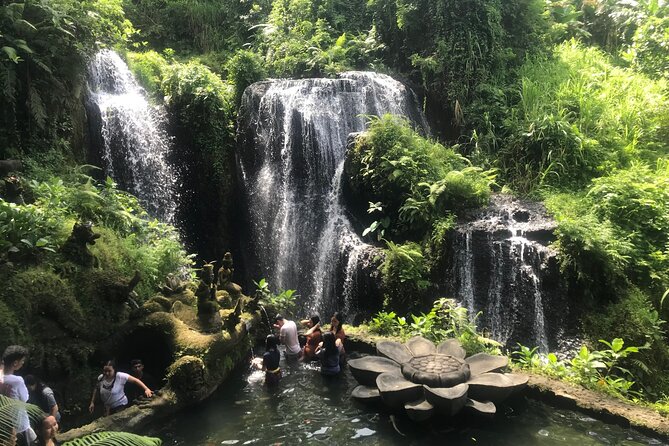
At Beji Griya Waterfall near Ubud, I like how you follow a priest-led purification routine instead of just snapping photos. The day’s built around two holy baths in the waterfall area, finishing with a blessing made from green and yellow coconut water.
I also like the ritual’s emotional structure. You’re guided to let go with a big release at the first waterfall, then switch gears to smile and laugh at the second. One consideration: the site can feel a little commercial, and you may run into upsell-style pressure for extras while you’re there.
Key things that make this worth considering
- Priest-led steps you can actually follow, from meditation or prayer to the final blessing
- Two separate holy baths, each with a different purpose, health balance first, then aura cleansing
- A clear emotional script, shout or cry at the first waterfall, then laugh at the second
- Coconut-water blessing details, using green and yellow coconut water for the last step
- Private, hotel-to-waterfall transport, with a local guide explaining what’s happening
- Cold water is part of the deal, so pack for comfort and quick changes
Getting to Beji Griya Waterfall from Ubud without turning it into a logistics project
This is a straightforward half-to-full day outing, set up around one main event: the purification holy bath ceremony at Beji Griya Waterfall. Bali Yowana Tour picks you up from your lobby hotel, and the drive usually takes 30 minutes to 1 hour depending on traffic and where you’re staying in the Ubud area.
You’ll get dropped back at your hotel after. Expect about 30 minutes to 1 hour for the return transfer as well. Plan on roughly 5 hours total from pickup to drop-off, even though the ceremony time itself is shorter.
The tour is private, meaning it’s only your group. That matters here because the ceremony includes steps you do at your own pace while your guide keeps you on track. It also means you’re less likely to feel rushed by a bigger crowd moving as one.
You can also read our reviews of more tours and experiences in Ubud.

What you are really paying for: $59 of guidance, access, and ceremony materials
At $59 per person, the big value is not just “entry to a waterfall.” You’re paying for a full package that includes the parts that make the ritual feel intentional:
- Private hotel pickup and drop-off
- A local authorized guide who stays with you and explains each step
- Parking fees
- Offerings (including incense sticks)
- A special sash or cloth used during the holy bath
- Admission support for the waterfall experience
Food and drinks are not included, so you should plan a snack situation before you go or bring light extras. Also keep in mind that you may want a swimsuit and a change of clothes since the ceremony ends with you wet and cold, then needing to reset.
If you’ve done Bali “waterfall days” where the main activity is climbing slippery steps and hoping you find the best angle, this is different. Here, the focus is the ritual flow, and your guide helps you do it the “right way,” which is usually what turns a trip into a memory.
The priest-led purification: the ceremony flow in plain English
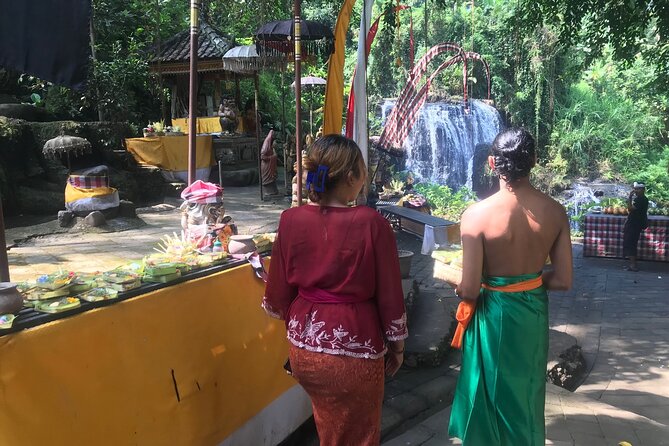
Here’s what to expect once you arrive at Beji Griya Waterfall. The tour is structured as a step-by-step procession, starting with a moment of calm and ending with a final blessing.
First, you meditate or pray with guidance from a temple priest. This sets the tone, and your guide helps you understand what is expected before you enter the water.
Then you move into the ritual route. The first part involves walking through a narrow canyon area. After that, the ceremony takes you to the first holy bath spot. This first dip is described as balancing your health.
Next comes the second holy bath at a small well used for cleansing your aura, with the aim of attracting happiness and luck. After that, the ritual asks you to release emotions in a very direct way, then repeat the emotional shift at the second waterfall.
Finally, you receive a last blessing from the priest with holy water made from green and yellow coconut water. It’s the kind of closing detail that gives the whole experience an ending you can feel, not just a “cool water, see you later” moment.
Step-by-step walking, water, and blessings (and where people get confused)
A ceremony like this only works smoothly if you know what each stage is trying to do. Your guide’s job is to keep it understandable. Here are the key stages and why they matter.
1) Meditation and prayer before the holy bath
You’ll start with a short spiritual lead-in, directed by a temple priest. This is practical as much as spiritual, because it helps you slow down and follow the flow instead of treating the whole thing like an extreme photo shoot.

2) First holy bath after walking the narrow canyon
You walk through the canyon and then do your first holy bath. The purpose is described as creating balance for your health. Even if you’re not sure how you feel about the symbolism, you can still appreciate that the ceremony gives structure to the moment your body hits the water.
3) Second holy bath at the small well for aura cleansing
The second dip focuses on aura cleansing, with the idea of attracting happiness and luck. Think of it as the ceremony’s “second act,” not just a repeat. The location and the purpose both shift.
4) Emotional release at the first waterfall, then joy at the second
This is the part many people remember most because it’s so clear-cut.
- At the first waterfall, you release anxiety, tension, and sadness by shouting or crying as loudly as you can.
- At the second waterfall, you switch to happiness by smiling and laughing as loudly as you can.
If you’re worried you’ll feel awkward, go anyway. This isn’t silent meditation. It’s an emotional reset, and the ceremony gives you permission to be louder than you normally are.
5) Final blessing with coconut-water holy water
At the end, the priest gives the last blessing with pure holy water made using green and yellow coconut water. It’s the ceremony’s closer, and it helps you wrap the experience with a sense of completion.
The two waterfall moments: why the shouting and laughing part works
The ceremony doesn’t just ask you to stand around and get sprayed. It uses the waterfall environment to anchor emotions.
At the first waterfall, you’re guided to scream or cry to release tension and sadness. At the second, you’re guided to smile and laugh to express happiness. That contrast matters. If your life has been heavy lately, the ritual gives you a clean switch: let it out, then lighten up.
Also, the nature part is real. You’re not in a studio. You’re in a waterfall setting where sound carries, water feels cold, and your guide makes sure you stay inside the proper flow. One common theme in feedback is that people felt the water as cold but cleansing, like a physical reset that matches the spiritual intent.
Clothing, supplies, and comfort tips that keep the day smooth
The tour advises light, comfortable clothing, and you should definitely bring a change of clothes. You’ll want:
- Swimsuit
- Change of clothes
- Sunscreen, sunglasses, and a cap or hat
- Water bottle and snacks
- Camera
- Petty cash
You’ll also be dealing with sun and wet conditions in a short span of time. So dress like you’re going somewhere you might get soaked, then need to dry off quickly.
Also, plan for the fact that you may feel chilly after the holy baths. The water is described as cold, but the ceremony framing is that it’s cleansing. If you run cold easily, pack extra layers for the ride back.
Private pickup, local guides, and how to get better photos without turning it into work
The tour is designed to feel guided from door to waterfall. Your guide accompanies you through the steps and explains each part so you’re not guessing.
Photography is a real part of the experience. The waterfall setting is considered well suited for photos, and the guide support can help you capture key moments. If you care about images, bring your camera and keep it accessible, but also remember that the main goal is the ceremony. I like keeping a simple plan: take a few careful shots during transitions, then put the camera away while you do the ritual steps.
If you’re lucky, your team will include drivers and guides who are friendly and help you feel at ease. Some people have specifically mentioned names like Vito and Pandu when describing how smoothly things went and how helpful the team was.
Who should book this (and who should sit this one out)
This experience is for most people, but there are clear boundaries.
- Minimum age is 10 years old
- Maximum age is 60 years old
- Women on period or menstruation are not allowed to do the holy bath, for safety reasons
So if you’re traveling with kids, this can work if they’re old enough to handle the walking and the ritual. If you’re in the upper end of the age range, it’s still an option, but keep comfort in mind because you’re walking through a canyon area and entering water.
This is best for you if you:
- want a Bali activity with a clear spiritual structure
- prefer a guided experience where someone explains what you’re doing
- like nature settings but don’t want a “wander and hope” day
You might think twice if you:
- hate loud rituals or emotional performances
- dislike any chance of being nudged to buy additional products on-site
Is it worth the cost versus other Bali waterfall experiences?
To me, the value is in what you get included. Many waterfall trips in Bali focus on transportation and a photo stop. Here, the $59 price combines access, explanation, ceremony materials (offerings, incense, sash/cloth), and hotel pickup and drop-off.
It’s also private, which usually reduces stress. Less time coordinating with strangers, fewer awkward pauses where you wait for everyone to catch up, and more attention from your guide during the steps that matter.
The only real “watch-out” is that you’re giving up the freedom to just come and go whenever you feel like it. The ceremony has its own timing, and you’ll be following the flow. If you like structure, great. If you’re the type who hates schedules, you may feel mildly constrained.
A quick reality check: what feels commercial, and how to handle it
One drawback that shows up is that the environment around the ceremony can feel a bit commercial. Sometimes that shows up as staff encouraging you to buy products or add-ons. If you’re not interested, decide your stance early.
My practical advice is simple:
- Set a personal budget before you arrive.
- If you don’t want extras, be polite and firm.
- Keep your focus on the ritual steps and your own comfort.
You can still enjoy the ceremony without feeding the sales energy.
Should I book the Purification Holy Bath at Beji Griya Waterfall?
If you want a Bali experience that feels grounded in a real local practice, this is a strong choice. I’d book it if you’re curious about priest-led purification, you’re okay with getting cold and wet, and you’re willing to participate in the emotional parts of the ceremony.
Skip it if you are uncomfortable with loud release rituals, or if you strongly dislike any on-site upsell pressure. Also skip if you fall into the age or menstruation restrictions.
Overall, the best way to think about this day is as a reset. You’re not just visiting a waterfall. You’re doing a guided sequence that ends with a blessing, then sends you back to your hotel feeling like you actually left something behind.
FAQ
What is the duration of the Purification Holy Bath experience?
The activity is listed at about 3 to 4 hours. Total time from pickup to drop-off is around 5 hours, depending on your hotel location and traffic.
Does the tour include hotel pickup and drop-off?
Yes. Bali Yowana Tour offers private hotel pickup and drop-off.
What is included for the holy bath ceremony?
You’ll have a local authorized guide to explain the steps, plus parking fees, necessary offerings (including incense sticks), and a special sash or cloth for the holy bath.
Are women on their period allowed to join?
No. Women on period or menstruation are not allowed to do the holy bath for safety reasons.
What should I bring with me?
Wear light, comfortable clothing, and bring a swimsuit and a change of clothes. It’s also advised to pack sunscreen, sunglasses, a cap or hat, a water bottle, snacks, a camera, and some petty cash.
What is the cancellation policy?
You can cancel for a full refund if you cancel at least 24 hours in advance. If you cancel within 24 hours of the experience start time, there is no refund.
More Tour Reviews in Ubud
Not for you? Here's more nearby things to do in Ubud we have reviewed




Tour Reviews, compared.
 ★ 5.0All-Inclusive Ubud Private TourFrom $10014,344 reviews
 ★ 5.0Best of Ubud Full-Day Tour with Jungle SwingFrom $568,571 reviews
 ★ 5.0Monkey Forest, Jungle Swing, Rice Terrace, and Water TempleFrom $317,160 reviews
 ★ 5.0Best of Ubud 1-Day Private TourFrom $544,451 reviews
 ★ 4.4Bali: Ubud Palace Legong Dance Show TicketFrom $63,979 reviews
 ★ 5.0Uluwatu Sunset, Kecak Dance, and Dinner Jimbaran BeachFrom $353,681 reviews
 ★ 5.0Tanah Lot and North Bali Tour: Scenic JourneyFrom $1003,620 reviews
 ★ 5.0Body Massage Experience in Ubud Traditional SpaFrom $213,506 reviews
Browse the lists this tour appears in