
Tour review · TOUR REVIEWS
Make Traditional Bali Coconut Oil with a Balinese Family
Handmade coconut oil feels real here, fast. This private class takes place in the Delodsema village area north of Ubud, where you make coconut oil the traditional way, right in a family setting. I love that it is hands-on and not staged. You also get to see everyday rural life instead of just watching a demo.
Two things I especially liked: the coconut scrub massage break in the middle of the work, and the chance to spend time inside a real Balinese household. You are welcomed with Balinese coffee or herbal tea and snacks, including Balinese cookies, before you get to the coconut process.
The main drawback to consider is logistics. Central Ubud transport is not included unless you upgrade, and the journey north takes you out to Taro, Tegallalang. Also, the oil-making step is the slow, traditional part, so plan for time and some hands-on effort.
Quick hits before you go
- Private, family-based experience: You join only your group, in a home setting in Delodsema.
- Tea, snacks, and sarong on arrival: You are welcomed with Balinese coffee or herbal tea plus Balinese cookies, and you get a sarong.
- Traditional coconut oil takes time: It is not rushed, and that matters for the end result.
- Coconut scrub massage during the wait: Relax while the oil is being made, so it does not feel like just standing around.
- Take-home souvenir: You leave with your own coconut oil at the end of the session.
Where Delodsema, Taro, and Tegallalang fit into your Bali plan
This experience is based in Delodsema Village, in Taro, north of Ubud, in the Tegallalang area (address listed around Jl. Taman Gajah, Taro, Kec. Tegallalang, Kabupaten Gianyar, Bali). If your Bali trip is mainly Ubud rice fields, cafés, and short day trips, this is a different kind of stop. You are trading viewpoints for a village routine.
What I like about this location choice is the rhythm shift. You go from the manicured pace of Ubud to a small rural community context. The description points out the village is home to about 50 families, which is exactly the scale where you feel less like a customer and more like a person being shown something.
Just be honest with yourself about your priorities. If you want quick and convenient, you might find north Ubud routes a bit more work. If you want authenticity and you do not mind leaving the central Ubud bubble, the setting is a big part of the value.
You can also read our reviews of more tours and experiences in Ubud.



Arriving for tea and getting into the home routine
Your visit starts back at the coconut oil class location in the village. You meet at Delodsema Village, and the experience is structured as a private activity, so only your group participates.
The first part is about comfort and setup. You get welcomed with Balinese coffee or herbal tea and snacks (Balinese cookies). You are also provided a Balinese sarong, which is not just for photos. In a home setting, it helps you shift into local etiquette quickly.
There is also a practical side that I appreciated from the details you get upfront: the session includes free WiFi. In a place where you will likely want to document your progress, this helps you share later without burning through your data plan.
If you choose transfers from central Ubud (optional upgrade), you may be met through the local team. One review mentions a chauffeur named Kadek and a welcome from his wife, Puta. Even if your exact greeting differs, it is clear this is run as a family business, not a call center operation.
Stop 1: The traditional Bali coconut oil class, step by step
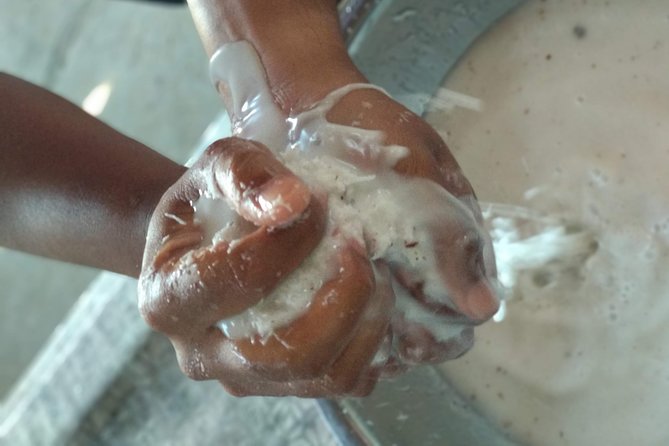
The core of the experience is your own coconut oil class. Plan on about 1 hour 30 minutes total for the session, but also keep in mind the oil-making process itself takes more than 1 to 1.5 hours in the traditional approach. That is why the schedule feels slower than a typical workshop. It is not a problem. It is the point.
Here is what the class experience generally feels like:
- You start with an introduction to the process and the tools.
- You begin working through the steps by hand.
- While the oil sets and finishes, you get the coconut scrub massage and time to look around the household and village life.
- When the oil is ready, you take your handmade coconut oil home as a souvenir.
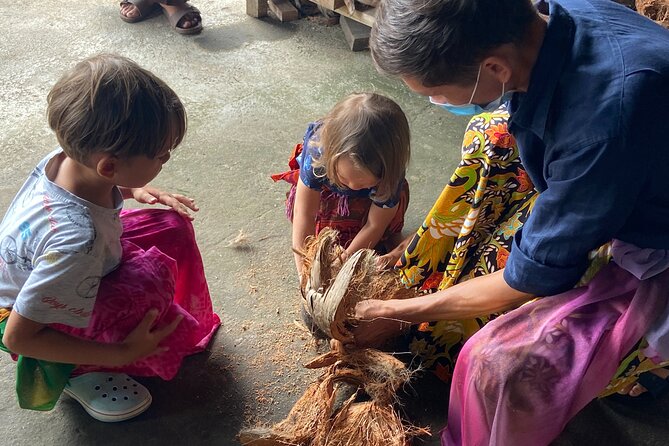
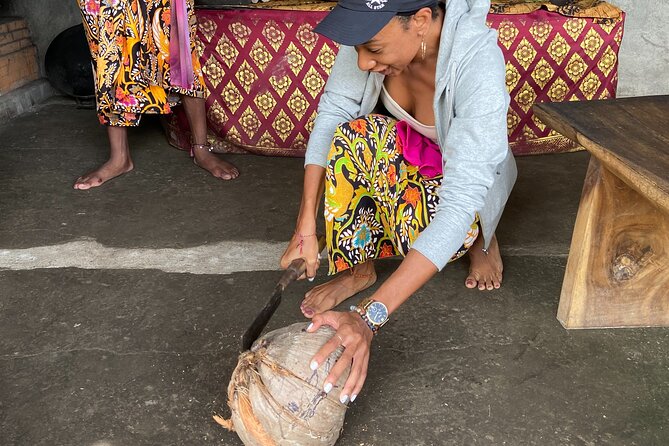
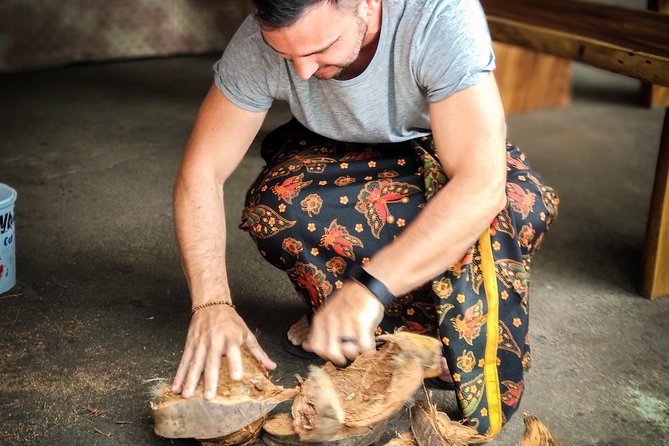
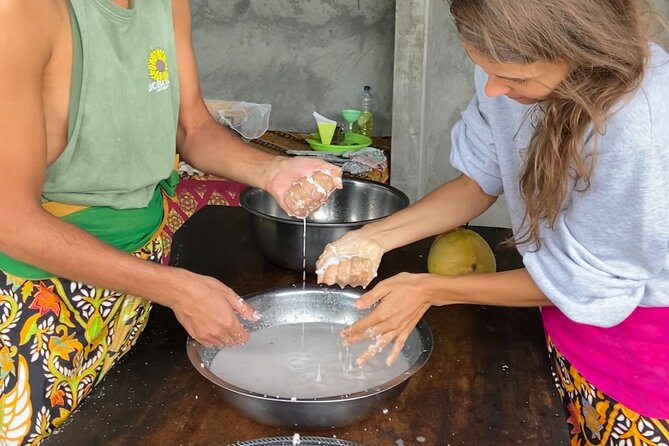
The hands-on element is consistently praised because every stage gets explained. You should expect to get your hands involved, including practical tasks like peeling coconuts. Reviews specifically mention trying coconut peeling and learning as you go, even if you are not naturally great at it. That is a good sign. It means the class is designed for real people, not people who already know everything.
Also, because this is a traditional method, the pace is different from modern factory processes. I like this because it teaches patience. You are seeing why a home technique can take time, and you are learning the steps rather than just collecting a product.
Why the process takes time, and why that matters
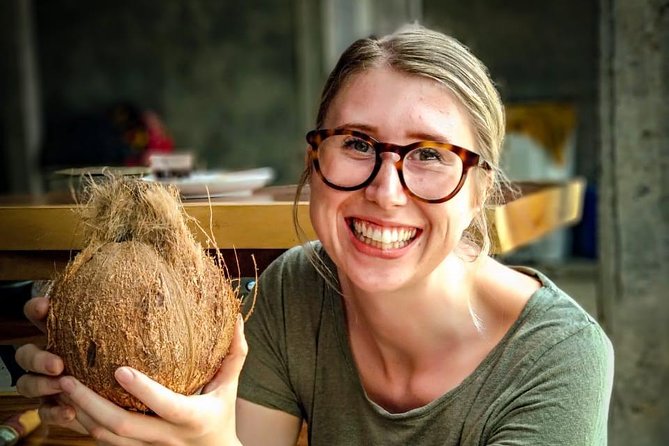
Coconut oil-making can sound simple until you see what actually goes into it. The traditional process takes longer, and that changes the whole experience. Instead of rushing from step to step, you watch how the oil develops and finishes.
From a practical standpoint, the time also gives you breathing room. You are not stuck in a classroom atmosphere. While you wait, the experience shifts to rest and exploration, which makes the workshop feel more like a village visit than a production line.
This is also why your take-home product feels meaningful. You are not just buying a jar. You made it by following the method. Even if you do not become a coconut-oil expert overnight, you leave with a souvenir that came from effort and learning.
One small reality check: if you dislike getting hands dirty, or you expect everything to be perfectly clean and indoor, you might feel less comfortable. This is a rural home setup with active work. The payoff is that you see how it really happens.
Coconut scrub massage, then village life in between steps
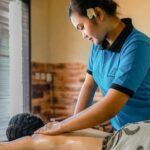
The description includes a coconut scrub massage during the session, and it is one of the highlights. It is smart pacing, too. When you are doing manual tasks, your body gets tense without realizing it. The scrub massage breaks that up.
The other “between steps” benefit is that you do not just wait. You explore the local environment, including traditional house elements and how people live day to day in the village. The village scale, about 50 families, makes that possible in a way it would not be in a big tourist zone.
If you want concrete examples of what the exploration can include, reviews mention things like eating fresh fruit from trees and feeding chickens. That is the kind of detail that makes the day feel personal, not generic.
The way it is described, you also spend time learning what local people do and seeing traditional house life. This is where the class becomes more than product-making. You get context, and that helps you appreciate why coconut oil matters in local routines.




The small extras that add up: sarong, cookies, and take-home oil
Some tours list extras to fill space. This one uses extras to support the real goal: giving you a gentle entry into village life while keeping you productive.
Here is what is specifically included:
- Balinese coffee and/or herbal tea
- Balinese cookies
- Tools and equipment for making coconut oil
- Balinese sarong
- Free WiFi
- Your coconut oil to take home
The take-home oil is not just a souvenir label. The entire experience is designed around you making it. That is why the product feels like a souvenir you can actually use, not just a photo prop.
I also appreciate the sarong and food elements because they make the interaction feel respectful. You are not rushed into the work. You start with hospitality.
Optional silversmithing class for a second keepsake
There is an option to upgrade and include a silversmithing class too. The idea is that you create a unique souvenir beyond the coconut oil, which is helpful if you want more than one practical item from the day.
What is not specified in detail here is how long the silversmithing part adds to your schedule. So if you are time-tight, ask the organizer when you book how the upgrade affects the total timing. Still, if you already know you like craft work and small-process souvenirs, the silversmithing option sounds like a natural add-on.
This optional segment also gives families and couples something different to focus on. Coconut oil is hands-on food and body care. Silversmithing is another kind of craftsmanship, and it can diversify the experience if you are traveling with different interests.
Price and logistics: what $27 really buys you
The price is listed as $27 per person. The booking timing averages about 18 days in advance, which tells me it is a popular value-focused activity for people who like Ubud’s side of Bali.
What you should do with the price information is compare it to what is included. At $27, you are getting more than a basic demonstration:
- Tea or coffee
- Snacks
- Tools and equipment
- A sarong
- Coconut scrub massage
- Your own coconut oil to take home
- A private group setup
That combination is the main reason this tends to feel like value. Many workshops charge similar or higher prices and then leave you with only an observation role or a small product.
Now the part to plan for: transportation. Transportation from central Ubud is listed as additional cost, IDR 350k round trip. The experience also offers an upgrade that includes round-trip transfers from central Ubud.
So do the math for your specific situation. If you are already hiring a driver for Ubud, you might be able to handle it with your plan. If you want a smooth, door-to-door day, the upgrade is likely worth it because it removes navigation and timing stress when you are traveling north.
Who this private Bali coconut oil class suits best
This experience is described as good for children, families, couples, groups, and solo travelers. The hands-on nature plus the village interaction makes it flexible.
Here is how I’d match it to travel styles:
- Families: The process is interactive, and reviews mention farm-like moments such as feeding chickens, which kids usually love.
- Couples: You get a shared craft and a relaxing scrub massage, plus a take-home souvenir you actually made together.
- Solo travelers: You get a structured activity in a home setting, which often feels safer and more welcoming than hopping from one public spot to another.
- Cultural-minded visitors: You are not just tasting coconut oil. You learn how it fits into everyday village life.
One more note to consider: it is private. That means you can ask questions and move at the pace of your group. It also means you might not get the social energy of a big group class. If you love meeting strangers on tours, this might feel more intimate and quieter.
Practical tips so your day goes smoothly
A few practical details can help you enjoy the workshop more:
- Expect hands-on work. Even with instructions, coconut tasks can be a bit messy and physical.
- Bring an open mind about pace. The traditional oil step takes time, and that is why the massage and village exploration are scheduled in.
- Plan for the north Ubud area. If you are staying in central Ubud, figure out your transport plan early so you do not waste the morning guessing routes.
- Wear something you can get a little dirty. You are working with food and natural materials.
- If you want two souvenirs, consider the silversmithing upgrade. Just confirm how it affects total timing.
If you do these things, the day feels easier. You spend less energy on logistics and more on the actual learning and interaction.
Should you book the coconut oil making experience in Delodsema?
I think you should book this class if you want an authentic, family-run cultural experience that mixes craft and care. The strongest reasons to go are consistent across the details: hands-on traditional coconut oil making, a coconut scrub massage, and real time spent in a rural village home.
You should reconsider if your priority is speed, minimal mess, or you want Ubud convenience only. The north location and the traditional process mean it is not a quick stop. Also, without the transfer upgrade, getting there and back from central Ubud is an added cost and planning step.
If your trip includes Ubud and you want one day that feels human, practical, and rooted in daily life, this is a strong match. The take-home coconut oil is a souvenir with value because you made it, and you also get the calm break of the scrub massage and the village exploration while the oil is finishing.
More Tour Reviews in Ubud
Not for you? Here's more nearby things to do in Ubud we have reviewed











Tour Reviews, compared.
 ★ 5.0All-Inclusive Ubud Private TourFrom $10014,344 reviews
 ★ 5.0Best of Ubud Full-Day Tour with Jungle SwingFrom $568,571 reviews
 ★ 5.0Monkey Forest, Jungle Swing, Rice Terrace, and Water TempleFrom $317,160 reviews
 ★ 5.0Best of Ubud 1-Day Private TourFrom $544,451 reviews
 ★ 4.4Bali: Ubud Palace Legong Dance Show TicketFrom $63,979 reviews
 ★ 5.0Uluwatu Sunset, Kecak Dance, and Dinner Jimbaran BeachFrom $353,681 reviews
 ★ 5.0Tanah Lot and North Bali Tour: Scenic JourneyFrom $1003,620 reviews
 ★ 5.0Body Massage Experience in Ubud Traditional SpaFrom $213,506 reviews