
Tour review · TOUR REVIEWS
Gianyar Market Visit & Cooking Class in Ubud with Kadek & Putu
Food starts at the market, not the kitchen. This Balinese class in Ubud pairs a hands-on ingredient hunt at Gianyar Market with cooking at Kadek and Putu’s family home. In about 4 hours, you learn why certain flavors show up again and again in Balinese cooking, then you sit down to eat what you made.
I love the way the market stops turn ingredients into a real lesson, not just sightseeing. And I like that the cooking time is active, chop-to-stove work where you get a clear breakdown of what each ingredient contributes to the final dishes. My one caution: the tour includes pickup only within Ubud, so if your hotel sits outside that area, you may pay an extra transport charge.
Key Highlights at a Glance
- Gianyar Market ingredient tour so you can spot the fruits, vegetables, and herbs behind classic Balinese flavors
- Hands-on cooking with Kadek and Putu with active chopping, prepping, and cooking from scratch
- Learn the dish-building process not just the recipe, so you can recreate meals later
- A family-compound meal afterward where you eat the dishes you made, including dessert options
- Menu flexibility for dietary needs including a vegetarian option, plus vegan or meat choices when available
- Round-trip transport within Ubud included for an easy, low-stress half day
First Stop: Gianyar Market and What You Actually Learn
Most Bali cooking classes start with a kitchen. This one starts with produce, and that matters. In the Gianyar market, you’re guided through the local fruits, vegetables, and herbs that show up in everyday Balinese cooking. Instead of memorizing a list, you connect each ingredient to how it tastes and how it behaves in a hot pan or pot.
What I like about this market portion is that it’s practical. You get the chance to see seasonal choices and get a feel for what cooks actually buy, not just what a tourist menu imagines. That helps when you try to recreate dishes at home, because you know what to look for, even if you cannot find the exact same herb.
You also get a sense of how Balinese meals balance components. Many dishes rely on fresh aromatics and greens alongside richer elements, like coconut. Even if you’re not a kitchen pro, you start understanding why a dish tastes layered rather than one-note.
One optional extra can make the first half-day feel even more local. If you’re interested, Kadek can show you how local fruits and vegetables are grown at his home nearby. Then you might enjoy fresh juice from just-picked seasonal fruits such as mulberry, passion fruit, papaya, mango, or jackfruit. It’s a simple add-on, but it changes the whole vibe from market shopping to seeing where the ingredients begin.
You can also read our reviews of more shopping tours in Ubud

Market-tip mindset (so you get more out of it)
Wear something comfortable you can move in. Markets are active, and you will be walking while you’re learning names and uses of ingredients. Also, keep an eye out for anything aromatic. If it smells strong in the market, it usually means it will show up as a flavor backbone in the cooking phase.
From Market to Home: Kadek, Putu, and a Real Balinese Family Compound
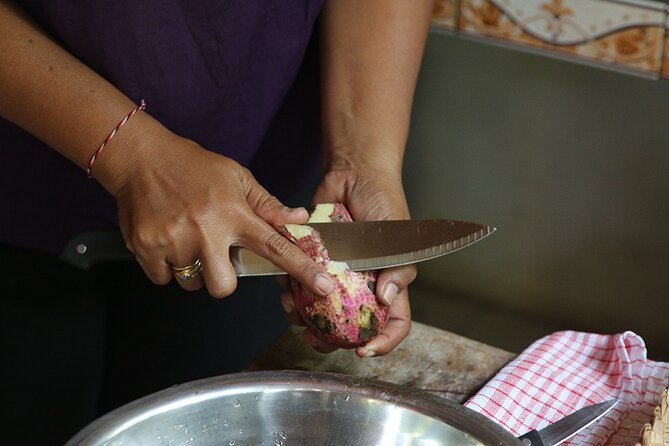
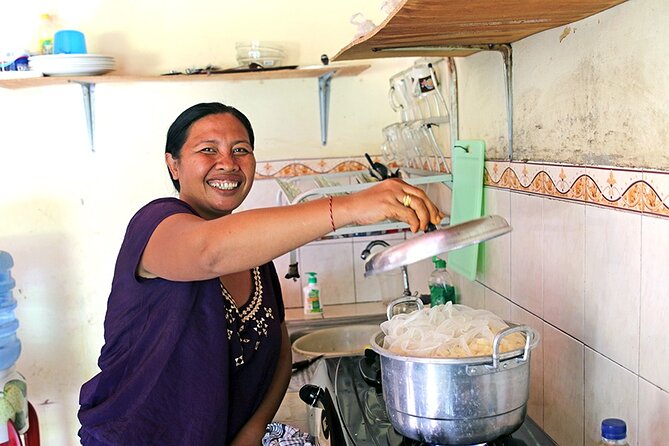
After the market, you head to the family compound to cook. This is where the tour becomes more than a class. Kadek and his sister Putu, along with family members, guide you through cooking Balinese dishes from scratch. That family setting matters because the pacing feels like a normal household day, not a staged performance.
I like that the experience is designed around real preparation work. You’re not just “watching someone else cook.” You’re involved from the start, including chopping and cooking steps. One of the best parts of the class is the way your hosts build confidence by breaking down ingredients, so you can understand how the dish comes together.
In the more positive write-ups, the most praised moments are exactly this: the hands-on approach, and the clear ingredient explanations. People describe being guided all the way from chopping to cooking, and that’s the sweet spot if you want to actually improve your cooking skills, not just take photos.
This is also a private setup, meaning it’s only your group. That usually translates into more attention and more time to ask questions, especially if you have dietary needs or want to understand what substitutions are possible.
The “from scratch” promise, what it means in practice
From scratch does not mean fancy. It means you’re learning how the dish is built using the ingredients you saw earlier. If you’re trying to replicate flavors later, that process is the value, not just the final plate.
What You’ll Cook: Typical Dishes and the Flavors Behind Them
The exact menu can change by season, but you can expect a classic Balinese spread. Think savory dishes first, then dessert. You’ll often work with combinations like sweet, salty, and coconut-forward elements. You’ll also encounter a mix of grilled, stewed, and stir-fried styles depending on the dish.
Here are examples of what you may cook and what to look for:
A few more Ubud tours and experiences worth a look





Savory plates you might make
- Piquant chicken satay: expect spiced chicken flavors that work with a smoky or grilled style. If you like bold seasoning, this is a great anchor dish.
- Fresh vegetable soup: this is where you can learn how greens and aromatics create body without relying only on heavy sauces.
- Stir-fried vegetables: a practical dish to learn because it shows how to balance heat, timing, and texture.
- Steamed fish: a lighter option that still tastes deeply thanks to seasoning and aromatic support.
- Rice: because in Balinese meals, rice is not an afterthought. It’s the base that carries the sauce and seasoning.
Dessert ideas you might finish with
- Black sticky rice pudding with fresh coconut cream: a classic that’s chewy and comforting, with coconut richness.
- Fried banana with grated fresh coconut and palm sugar: sweet, aromatic, and an easy dessert to recreate if you can find coconut and palm sugar.
If you’re wondering whether this class teaches you “just one signature dish,” the answer is no. You typically cook multiple dishes, and you get to see how the same core ingredient family shows up across different preparations.
Vegetarian, vegan, and dietary choices
Vegetarian is available if you advise in advance. Some descriptions also mention you can choose vegan or meat options, depending on the day and the menu. The key move here is to tell your host up front if you have restrictions or cooking preferences, including allergies.
That’s important because Balinese flavor systems can depend on ingredients you might not expect. You want your class to be adapted in a real way, not patched together at the last moment.
The Meal Part: Eating What You Cook (and Why It’s Not a Throwaway)
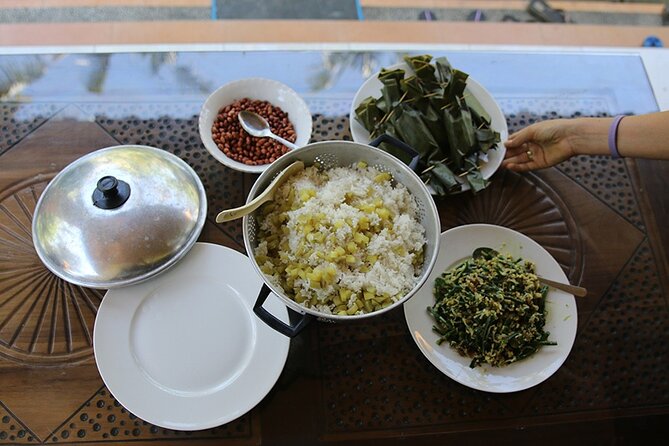
After cooking, you sit down to enjoy an authentic Balinese meal with what you made. This is not a “snack after class.” It’s a full sit-down meal that lets you taste-test your work while the flavors are fresh in your mind.
I love this format because it turns the class into something you can remember clearly. When you eat, you notice what you did right and what you’d adjust next time. If a sauce feels too intense, you understand why. If something tastes brighter, you connect it to a specific ingredient you handled earlier.
The included meal is a big part of value. You are paying for instruction, ingredients, cooking time, and then the dinner itself. It’s a full use of a half-day, not a quick demo followed by an empty stomach.
Also, alcoholic beverages are included. If you do not drink, you can still enjoy the meal. Just know the option is built in, which can make the dining portion feel more like hosting than class.
Price and Value: Is $80 Reasonable for a 4-Hour Class?
At $80 per person for about 4 hours, the price can look steep if you’re only comparing it to a “tour.” But once you break down what you actually get, it’s easier to see the value.
You’re paying for:
- a private market tour and cooking class with Kadek and Putu
- a homecooked meal afterward
- alcoholic beverages
- pickup and drop-off to Ubud hotels only
For Ubud, that’s meaningful, especially because transport is included for hotels within Ubud. If your lodging is outside Ubud, the additional charge for round-trip transport can change the math, so factor that in early.
Is it worth it? If you want a repeatable skill and a real food memory, yes. If you just want to eat Balinese dishes without caring about technique, you could find cheaper options. But if you want to come home able to rebuild the flavor of piquant satay, coconut desserts, and savory greens, this is the type of experience that actually pays off later.
Who gets the best value
You’ll get the most from this if you enjoy food, ask questions, and like the idea of learning in a home setting. It’s also great for couples and small groups who want a more personal pace instead of a big group kitchen.
Timing, Transport, and What to Plan Around
This is an about-4-hour experience. That’s long enough to include both the market and full cooking, but short enough that it won’t hijack your whole day in Ubud.
Pickup is offered from your Ubud hotel, then you’re dropped back after the meal. If your hotel is outside Ubud, there is an extra charge for transport, so give the reservation your hotel name and address so the host can arrange pickup accurately.
Booking tends to be made about 6 days in advance on average. That’s not a strict rule, but it’s a sign this class fills up, especially if you’re traveling during peak times.
The practical gear checklist
You don’t need fancy clothes. Just choose breathable fabric and shoes you can handle on market walkways. Bring a light layer if you’re sensitive to air conditioning in the car, and consider a small towel or tissues if you get a lot of fruit juices on your hands.
What Makes This Class Different From a Generic Cooking Show
Plenty of cooking experiences teach recipes. The standout here is how the class connects ingredients to dishes.
Two things come up again and again in how people describe the experience:
- Every meal starts with the ingredient breakdown. That helps you understand what matters, not just how to follow steps.
- The class is truly hands-on. You chop and cook, not just watch.
That combination is what makes it feel useful. When you can explain why a dish tastes the way it does, you can adjust ingredients later and still get close to the same outcome.
It also helps that the hosts are named and involved throughout, Kadek and Putu, which tends to make the experience feel personal rather than anonymous. In a family compound setting, the lesson becomes more natural, like learning from someone who cooks at home every day.
Should You Book This Ubud Cooking Class?
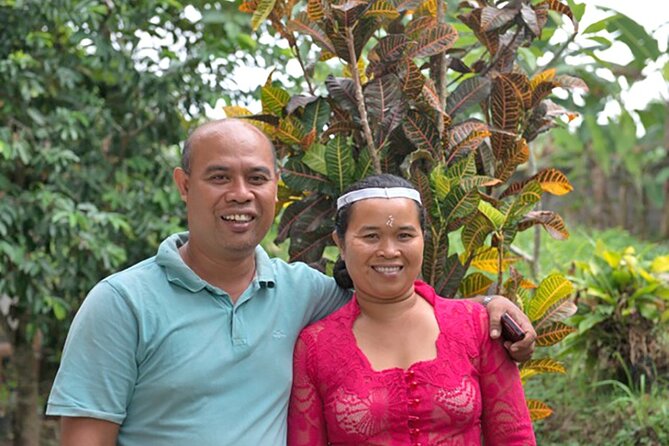
Book it if you want a Balinese cooking lesson that starts in the market and ends with a real family meal. If your goal is to recreate dishes at home, the market-to-stove flow is exactly what you want, because you learn what to look for when the exact ingredients differ.
Skip or reconsider if you need a strict schedule to the minute, or if your hotel is far outside Ubud and the transport add-on makes the price jump. Also, if you have serious allergies, message your needs during booking so the vegetarian option and ingredient substitutions are handled properly.
One more simple check: if you’re the type who enjoys talking food while you cook, you’ll probably love this. If you prefer just eating and moving on, you might want a different style of tour.
FAQ
FAQ
How long is the Gianyar market visit and cooking class?
It’s about 4 hours.
How much does it cost?
The price is $80.00 per person.
Do you get pickup in Ubud?
Yes, pickup and drop-off are included for Ubud hotels only.
Is transport included if my hotel is outside Ubud?
Pickup and drop-off outside Ubud are not included. There may be an additional charge if your hotel is outside Ubud.
What does the class include?
You get a private market tour and cooking class with Kadek and Putu, a homecooked Balinese meal, alcoholic beverages, and round-trip transport within Ubud.
Is there a vegetarian option?
Yes, a vegetarian option is available. You should advise at booking.
Are there any notes about the menu?
The menu may vary depending on the season.
What should I do if I have allergies or dietary restrictions?
Advise your host at the time of booking so they can plan the menu to fit your needs.
Can I cancel for a full refund?
Yes, free cancellation is available. You can cancel up to 24 hours in advance for a full refund.
More Markets in Ubud

More Shopping Tours in Ubud
More Tour Reviews in Ubud






Not for you? Here's more nearby things to do in Ubud we have reviewed












Tour Reviews, compared.
 ★ 5.0All-Inclusive Ubud Private TourFrom $10014,344 reviews
 ★ 5.0Best of Ubud Full-Day Tour with Jungle SwingFrom $568,571 reviews
 ★ 5.0Monkey Forest, Jungle Swing, Rice Terrace, and Water TempleFrom $317,160 reviews
 ★ 5.0Best of Ubud 1-Day Private TourFrom $544,451 reviews
 ★ 4.4Bali: Ubud Palace Legong Dance Show TicketFrom $63,979 reviews
 ★ 5.0Uluwatu Sunset, Kecak Dance, and Dinner Jimbaran BeachFrom $353,681 reviews
 ★ 5.0Tanah Lot and North Bali Tour: Scenic JourneyFrom $1003,620 reviews
 ★ 5.0Body Massage Experience in Ubud Traditional SpaFrom $213,506 reviews
Browse the lists this tour appears in