
Tour review · TOUR REVIEWS
From Ubud: Authentic Cooking Class Visit Traditional Market
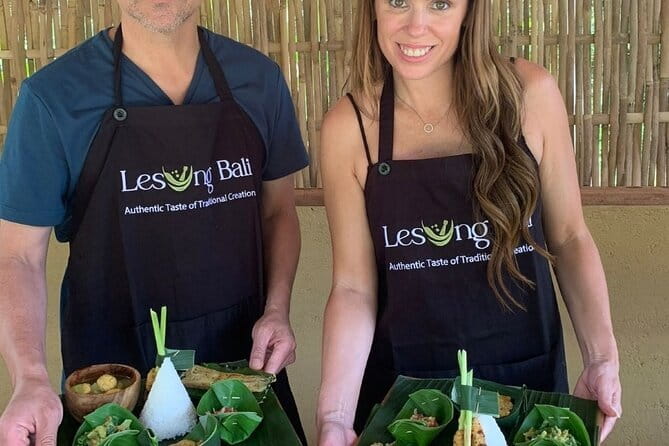
A market morning is the best warm up for Bali cooking. In Ubud, you shop for ingredients, learn how Balinese sauces and pastes come together, and then eat what you make, with a visit to Celuk Village for traditional craftwork later on. Two things I really like are the ingredient shopping first, and the fact you leave with a free recipe booklet and PDF, so you can cook again at home. One thing to consider is timing, the class is listed at about 3 hours but the cooking portion is described as closer to 3.5 hours, so wear shoes you can stand in for a bit.
You’ll also get private, air-conditioned transport with pickup in popular areas around Ubud, like Kuta, Seminyak, Canggu, Sanur, and more. The experience is built for different groups, from couples to families, and dietary needs can be requested in advance, including vegan options and allergy considerations.
Key Highlights You Should Actually Care About
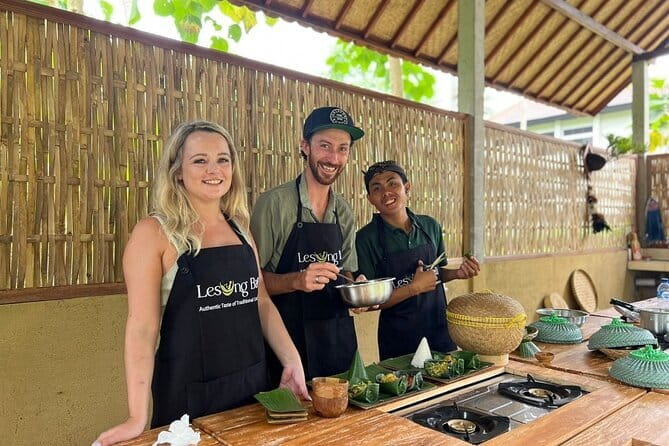
- Traditional market ingredient picking before you cook, so you understand what drives the flavor
- 5 dishes plus 1 dessert, which means you are not stuck tasting tiny samples
- Balinese sauces and pastes training, the part many cooking classes skip
- Celuk Village craft visit, known for traditional handicrafts like batik and metalwork
- Recipe booklet plus PDF, useful for recreating flavors back home
From Market Stalls to Your Cutting Board in Ubud
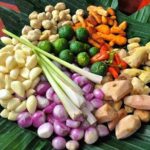
This is a hands-on Balinese cooking class that starts with shopping, not a lecture. That single decision changes everything. When you pick chilies, aromatics, and other ingredients in the market, you stop guessing what goes where and start understanding why certain flavors show up again and again in Balinese dishes.
You are not just learning to cook. You are learning how Balinese cooking is built. The core skill is making sauces and pastes, then using them to build side dishes and main courses. If you have ever tried a recipe later and wondered why it tasted flat, it is often because the sauce and paste step was treated like an afterthought. Here, it is a focus.
You can also read our reviews of more shopping tours in Ubud
Pickup, Transport, and the Real Meaning of “Included”
The value here is not just the cooking. You get private transport with air-conditioning and a driver who speaks English. That matters in Bali, where heat and traffic can turn a half day into a sweaty slog if you are trying to manage things on your own.
Your tour includes:
- mineral water during the experience
- a welcome drink and snacks
- private transportation
- the cooking class time, listed around 3.5 hours in the details
- all ingredients and the food you cook
- a farm tour
- a free recipe booklet and a PDF recipe version
- pickup service from a long list of areas including Ubud, Kuta, Seminyak, Canggu, Legian, Jimbaran, Nusa Dua, and Sanur
Also, the experience is private, meaning only your group participates. Even if it is priced per person, that private setup usually gives you more attention when you have questions in the kitchen.
A small timing note
Plan your day with a cushion. Between the market walk, kitchen time, and the craft stop, it can feel like more than just a quick cooking class. If you are juggling other tickets or a tight schedule, you will thank yourself for leaving some breathing room.
Traditional Market Stop: The Ingredient Lesson You Can Taste
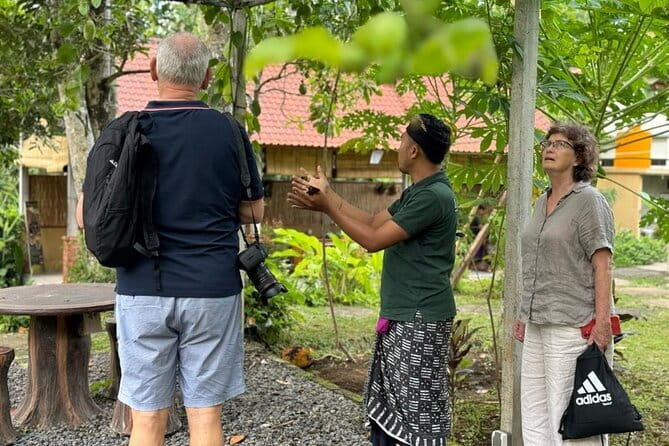
The market visit is the opening act, and it sets the flavor tone for everything that follows. You choose fresh ingredients yourself. The shopping list in the experience description includes meats, fish, exotic spices, poultry, and tropical fruits.
Even if you are not a hardcore foodie, this part is useful. You get direct context for the paste and sauce ingredients you will later grind, mix, and cook. And you also see how ingredients are sold and portioned in real life, not just in cookbook measurements.
What to watch for when you shop
You will likely get guidance from your hosts, but you can still make the market work for you by paying attention to:
- how different aromatics look and smell, especially chilies and spices
- how herbs and fruit are grouped
- which ingredients are fresh, fragrant, and still vibrant in color
If you have dietary restrictions, this is also the moment to flag them. The tour says you can request accommodations for dieters, vegans, and allergies after booking or before the experience. That means you should expect menu adjustments, but it helps to communicate early and clearly.
A few more Ubud tours and experiences worth a look





The Farm Tour: Where Ingredients Start (and Why That’s Not Random)
A farm tour is included, though the details are brief. Still, it fits the theme of the day. Markets show you what people buy. A farm component helps you connect that purchase to how ingredients come from the land.
If you like cooking because you want the story behind flavors, this is your chance to build that context. Even a short farm stop can help you understand why certain spices and plant ingredients show up frequently in Balinese cooking.
In the Kitchen: Sauces, Pastes, and the 5 Dishes Plus Dessert
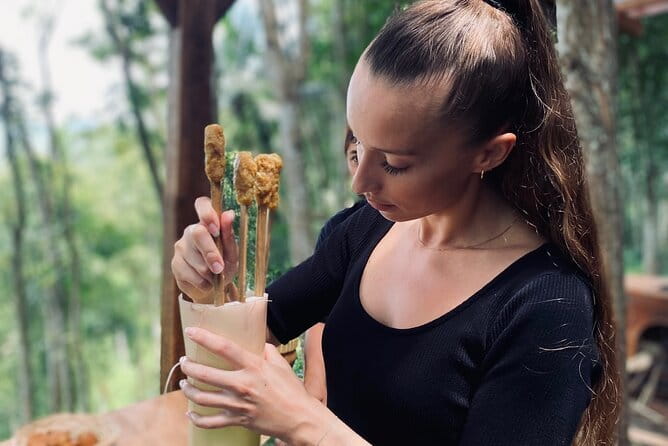
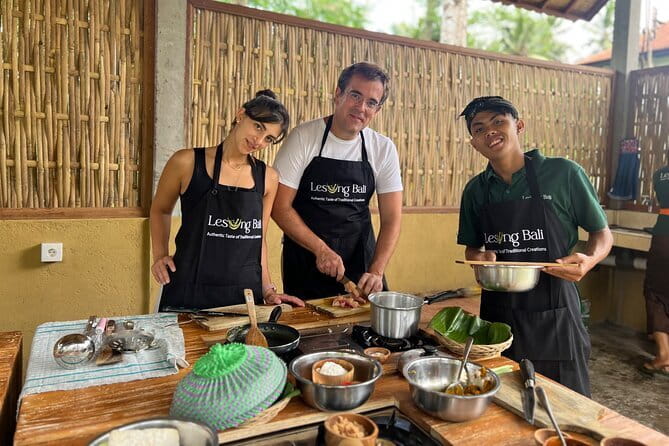
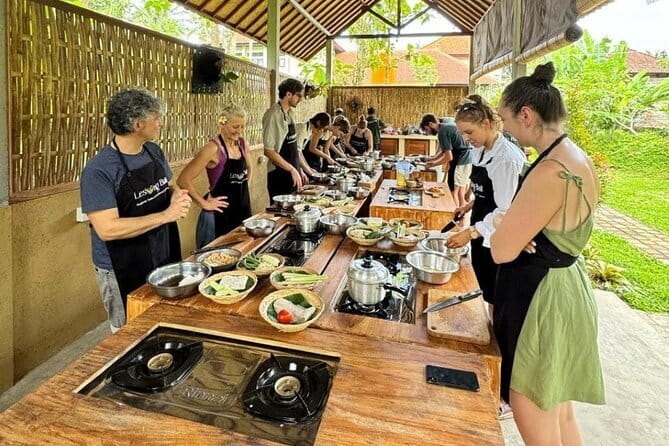
This is the heart of the experience. After you shop, you head to the kitchen to learn how Balinese sauces and pastes are made, then how they are used to build side dishes and main courses. The structure is practical, the kind of class where you leave with skills, not just memories.
Why the sauce and paste focus matters
Balinese flavor often starts with ground mixtures. You are learning the art of making these bases, which then carry into multiple dishes. If you want consistency, pay attention during the paste and sauce steps. Getting that right is what makes the later dishes taste like they belong together.
What you actually eat
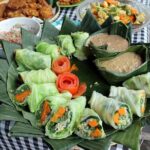
The experience includes food you cook, and it lists 5 dishes and 1 dessert. That is a solid meal output for a cooking class. You are not paying just for instruction, you are paying for eating what you made, and enough variety that you can compare flavors across dishes.
A helpful detail from the feedback is that the chef leads in a way that feels both informative and fun. One chef name that came up is Ron, described as funny and informative. That kind of energy helps when you are learning techniques that are unfamiliar, like building pastes from scratch.
Drink and snack support
You also get a welcome drink and snacks. That sounds small, but it makes the class easier. Market shopping can be tiring, and it is nicer to have a little energy boost before you spend time chopping, grinding, and stirring.
Celuk Village Art Stop: Batik, Wood Carving, and Gold and Silver Smiths
Near the end, you visit Art Village with Celuk Village as the named stop. This is a craft-focused detour from the food theme, but it still fits. Bali is not just spices and cooking. It is hands and tradition too.
In the description, you can see local artisans producing traditional handicrafts such as:
- batik
- wooden carving
- gold and silver smith work
If you want souvenirs that are tied to local skill, this stop is a better use of time than a generic shopping stop. You get to watch craft happening in context, and you can ask questions when you see the process.
The trade-off
Craft visits tend to be time-flexible, and sometimes they can lead to browsing and buying. If you want zero pressure shopping, just treat it as a look and take your time, not a quick stop. The class is private, so your group has more control over how long you linger.
Dietary Needs and Allergy Requests: What You Can Ask For
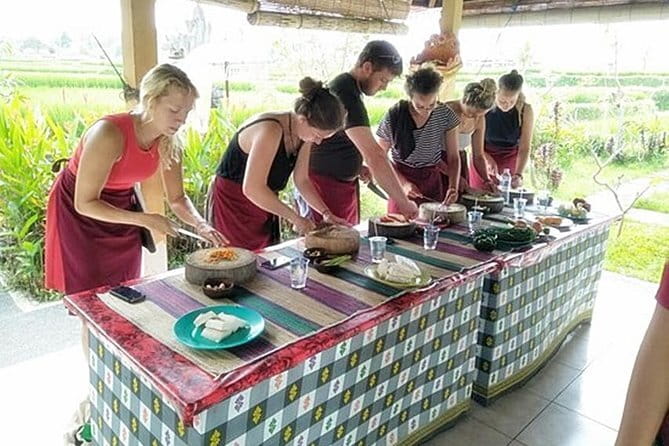
This experience states that the class can cater to dieters, vegans, and allergies. You can request these needs after booking or before the experience.
That is important because cooking classes often work only for standard menus. Here, the promise is that adjustments are possible, which means you can still participate fully rather than sitting out half the dishes.
Practical tip: when you request dietary needs, be specific. If you have a strong allergy, list it clearly. If you are vegan, confirm you are avoiding all animal products, including things that sometimes sneak into sauces. The tour data confirms accommodations are available, but details will still depend on how you describe your needs.
Pricing and Value: Is $45 Actually Fair?
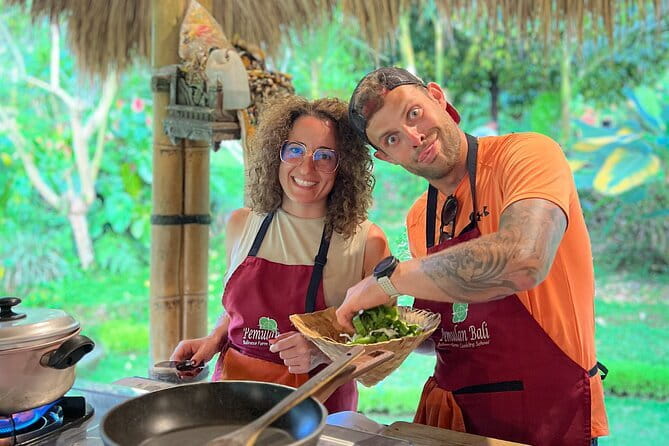
At $45 per person, this is not an elite, high-end private cooking experience. It is positioned as good value for what you get.
What you are paying for:
- market shopping experience
- cooking class instruction
- all ingredients and the full food output (5 dishes and a dessert)
- farm tour
- transport with air-conditioning
- pickup from multiple Bali areas
- recipe materials, including a PDF
So the price is not just the chef’s time. It is the entire day of logistics and food. If you add up an equivalent market tour plus a restaurant meal plus a separate transport arrangement, the cooking class package can start to look like a bargain.
Who feels the value most
You will feel the best value if:
- you like food enough to enjoy learning techniques you can repeat
- you want a structured meal, not just a quick tasting
- you prefer not to figure out transport and scheduling on your own
For Families, Couples, and Groups: Who This Fits Best
The experience is described as a good match for families, couples, and groups. That makes sense because it is private, with private transport and a schedule that is easy to follow.
For families, the big win is that kids and adults can share the meal you make. For couples, ingredient shopping and the shared cooking work can feel like a real activity, not just another excursion. For groups, private format keeps the day organized, and it makes it easier to handle different dietary requests.
If you are traveling solo, you may still enjoy the structure, but the private-group feel may mean you care most about learning and eating, not meeting lots of new people.
Tips to Make Your Day Go Smoothly
You cannot control the market crowds or kitchen pace, but you can control how ready you are.
- Wear comfy shoes for market time and kitchen standing.
- Bring a light layer. Air-conditioned transport helps, but markets and kitchens can vary.
- If you have dietary needs, request them early. Then remind your host when you arrive.
- Use the recipe booklet and PDF right away. Cooking classes are fun, but the real value is recreating the flavors later.
Also, keep an eye on portion expectations. You are cooking multiple dishes and eating what you cook. Plan on a full meal experience, not a light snack outing.
Should You Book This Ubud Cooking Class?
Book it if you want a practical Balinese cooking experience that starts with ingredient picking and ends with a proper meal. The market-to-kitchen flow is the biggest strength, because it helps you understand the why behind the flavor. I also like that you get Celuk Village craft work at the end, so the day is not only food.
Skip it or reconsider if:
- you have a very tight schedule and can’t afford a half-day time block
- you only want a quick cooking demo and prefer a lighter format
- you dislike craft or artisan shopping components, even if it is meant to be a cultural stop
If you book, treat it like a skill-building meal date. Your goal is to learn the sauce and paste approach, not just copy a dish. When you do that, the recipe booklet and PDF stop being paperwork and start being a real tool.
FAQ
How long is the cooking class?
The experience is listed as approximately 3 hours, and the cooking class portion is described as about 3.5 hours.
What is included in the cooking class meal?
You cook and eat all of the food your group prepares, including 5 dishes and 1 dessert.
Do you visit a traditional market?
Yes. The experience includes a visit to a traditional market where you can pick your own ingredients.
Is pickup available?
Yes. Pickup service is available in Ubud, Kuta, Seminyak, Canggu, Legian, Jimbaran, Nusa Dua, and Sanur.
Is this a private tour?
Yes. It is private, and only your group participates.
Can the class accommodate dietary needs or allergies?
Yes. You can request accommodations for dieters, vegans, and allergies after booking or before the experience.
What language support is provided?
An English speaking driver is included.
Is there a recipe booklet?
Yes. You receive a free recipe booklet and a PDF recipe.
What is the cancellation policy?
Cancellation is free. You can cancel up to 24 hours in advance for a full refund. If you cancel less than 24 hours before the start time, there is no refund.
More Markets in Ubud
More Shopping Tours in Ubud
More Tour Reviews in Ubud






Not for you? Here's more nearby things to do in Ubud we have reviewed












Tour Reviews, compared.
 ★ 5.0All-Inclusive Ubud Private TourFrom $10014,344 reviews
 ★ 5.0Best of Ubud Full-Day Tour with Jungle SwingFrom $568,571 reviews
 ★ 5.0Monkey Forest, Jungle Swing, Rice Terrace, and Water TempleFrom $317,160 reviews
 ★ 5.0Best of Ubud 1-Day Private TourFrom $544,451 reviews
 ★ 4.4Bali: Ubud Palace Legong Dance Show TicketFrom $63,979 reviews
 ★ 5.0Uluwatu Sunset, Kecak Dance, and Dinner Jimbaran BeachFrom $353,681 reviews
 ★ 5.0Tanah Lot and North Bali Tour: Scenic JourneyFrom $1003,620 reviews
 ★ 5.0Body Massage Experience in Ubud Traditional SpaFrom $213,506 reviews
Browse the lists this tour appears in