
Tour review · TOUR REVIEWS
Balinese Traditional Food Cooking Class with Ubud Monkey Forest and SPA
A perfect Ubud day has one part brains and one part body. This one pairs a Balinese cooking class that starts at a local market and rice farm, then moves to the Sacred Monkey Forest Sanctuary and ends with a 2-hour spa. If you like food you can recreate later, you’ll enjoy the hands-on style that turns ingredients into dishes you actually make.
Two things I like a lot are the pacing (market to farm to cooking, then monkeys, then spa) and the support built in, from hotel pickup to a private driver plus a guide during the cooking. One thing to keep in mind is that the day is schedule-heavy, so you’ll want to be ready for an early start and a fairly full block of time in the Ubud heat.
Key highlights at a glance
- Market and farm ingredient lesson before you start cooking
- Small group size up to 15, with personal attention from the cooking instructor
- Hands-on recipe making, plus lunch included at the class
- Sacred Monkey Forest Sanctuary with hundreds of long-tail macaques and culturally important trees
- 2-hour spa package (1-hour massage plus 1-hour body scrub) included
From hotel pickup to kitchen skills in Ubud
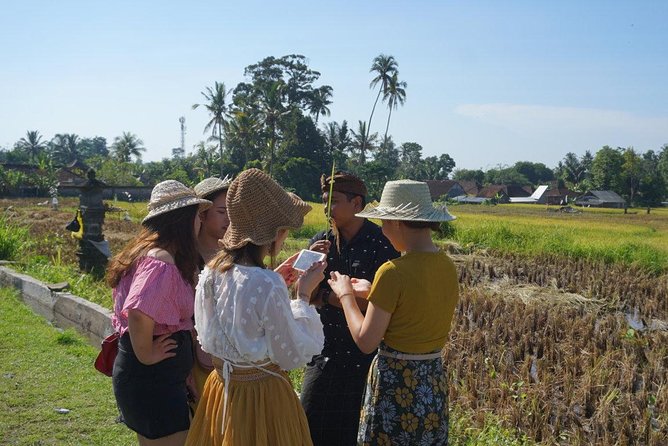
This is a full-day Ubud experience designed for people who learn best by doing. You start early, guided from your hotel to a local market, then on to farmers who show you how rice is grown. After that, you cook Balinese food using authentic recipes and ingredients, and you eat what you make. The day then shifts gears into nature and culture at the Sacred Monkey Forest Sanctuary, before finishing with a spa treatment that’s basically built for recovery after a long, active morning.
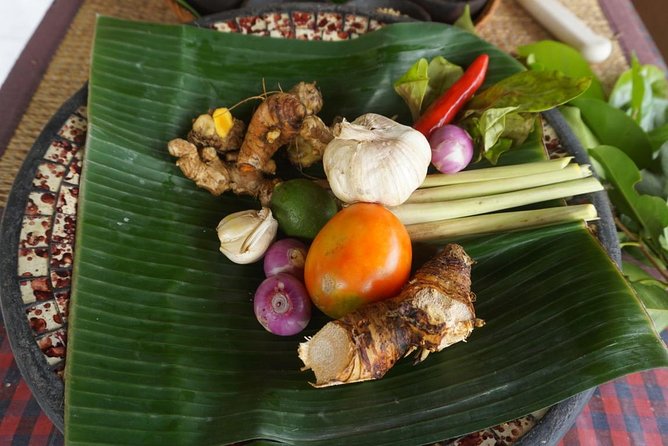
What makes it feel different from the usual “see and snack” tours is that the food is taught with context. You are not just learning techniques in a kitchen. You’re learning what ingredients mean in Balinese cooking, where they come from, and why they’re used together. That makes your dishes taste more intentional when you recreate them later.
You’ll also appreciate how the day is structured. A private driver handles transportation, and the tour includes bottled water, so you’re not constantly problem-solving on the spot. With a small group, you’re less likely to feel like a number while questions fly during cooking.
One more practical detail: the tour notes a maximum of 15 travelers. That’s large enough to keep it social, but small enough that your guide can still guide, correct, and explain without rushing.
You can also read our reviews of more food & drink experiences in Ubud
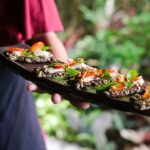
Market time at 8:30, with ingredients you can name
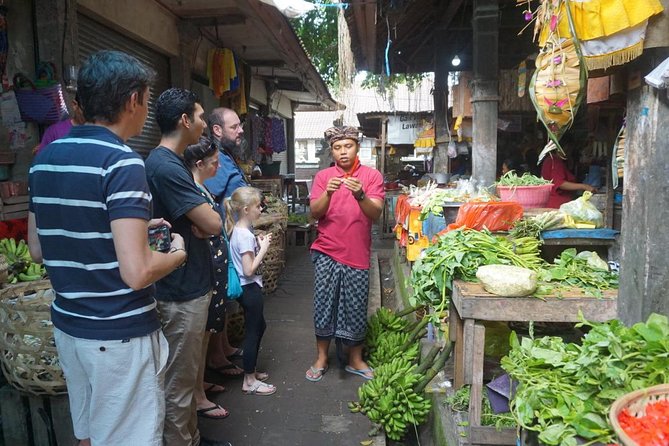
Your day starts around 7 am with hotel pickup in Bali. You’ll meet your guide at 8:30 am and head into a local or traditional market. This part matters, because market shopping in Bali is not just about produce. It’s where you get your first look at the ingredients that show up again and again in Balinese flavors, from herbs and spices to items used in local dishes.
I like that this tour doesn’t treat the market as a photo stop. It’s part of the learning flow. When the cooking class later asks you to work with specific ingredients, you already know what they look like and what they’re supposed to do in the final dish.
You also get a benefit here that’s easy to overlook: you’re learning in the order you’ll cook. That reduces confusion later. If you’ve ever taken a cooking class where the instructor starts mid-recipe with ingredients you’ve never seen, you know how that can go. This avoids that by putting the market lesson first.
Farmers and rice growth: why Balinese cooking starts upstream
After the market, you meet the farmers and learn how rice is grown. Rice is a core ingredient in Bali, and learning about cultivation helps you understand why rice often sits at the center of meals and everyday food culture.
This stop is also a useful reset after the market. Market walking can be lively and sensory-heavy. Rice farm time tends to slow things down, and it gives you something grounded to think about while you later practice cooking steps.
You should expect questions and explanations tailored to your guide’s approach. Even if you don’t consider yourself a “food person,” rice and ingredient sourcing are the kind of knowledge that makes cooking classes feel worthwhile. You’re not memorizing steps only. You’re connecting steps to real food systems.
The cooking class: making multiple Balinese menus
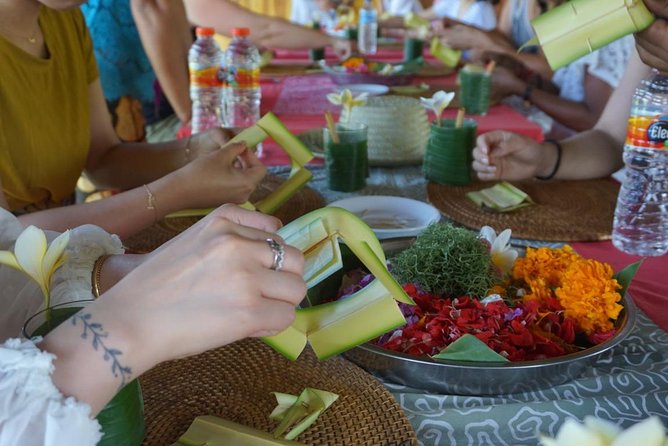
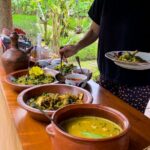
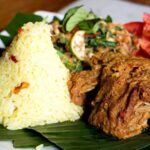
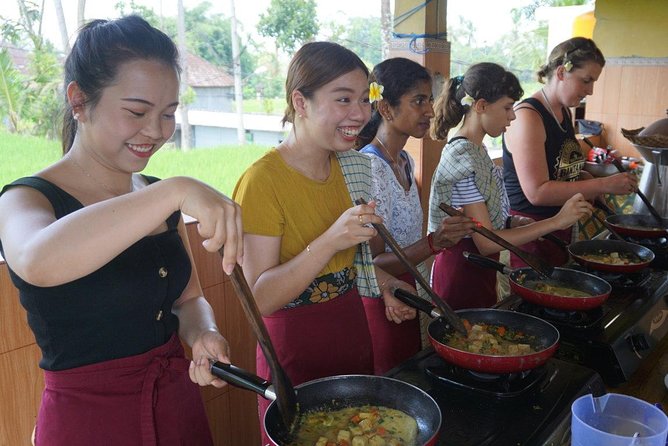
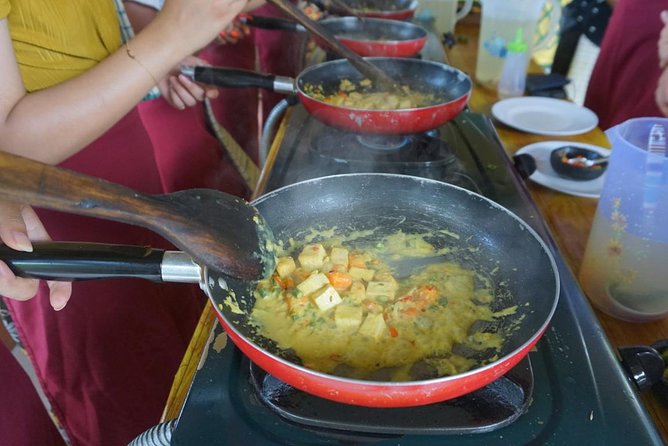
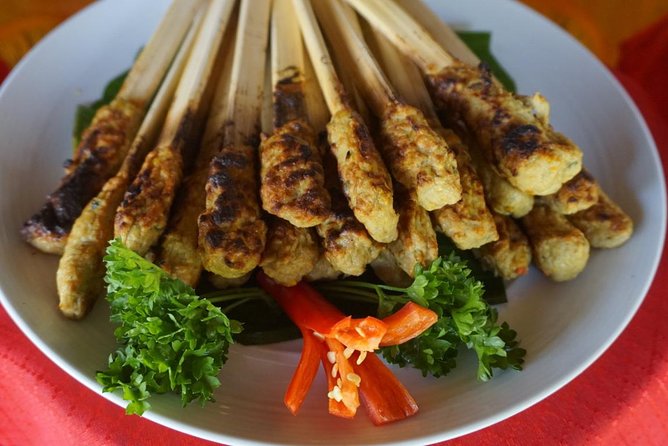
The cooking class is where the day pays off. Your instruction focuses on authentic Balinese recipes and the ingredients you’ve already seen in the market and learned about through the farm visit. The class runs so you can make several menus, not just one dish, and you’ll have lunch included at the cooking venue.
Two details stand out for value. First, you’re not left alone. The class guide is there to help during the cooking, and the tour keeps group sizes small. Second, it’s designed around you eating what you cook. That’s not just included convenience. It’s a learning tool, because you taste your work and can adjust what you think you did right or could improve.
There’s also an important nuance: the cooking class itself is not private. The broader tour and spa are private. That’s fine for most people, but if you strongly prefer a one-on-one cooking setting, this is something to consider. Still, with a group limited to 15 travelers, you should expect a more hands-on feel than you’d get in a very large tour.
A smart tip: wear comfortable clothes you can move in, because cooking tends to involve standing, chopping, and shifting stations. If you’re hoping to take photos, you may still get good shots, but you’ll enjoy it more if you focus on cooking first and snapping second.
Lunch included: the part you should not rush
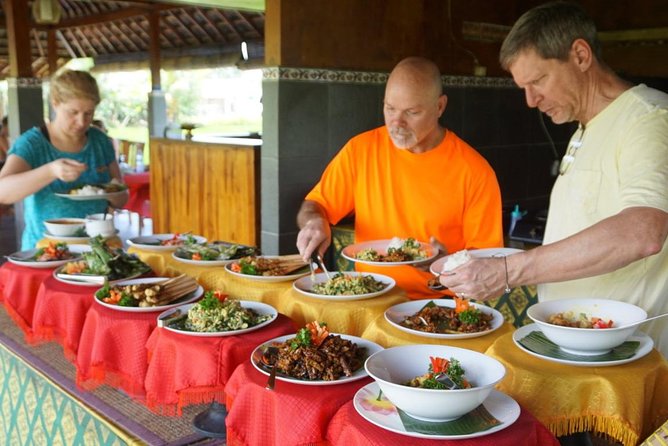
Lunch comes with the cooking class. This is one of those “included” perks that actually matters, because it keeps the day smooth. You’re not scrambling to find something nearby while you’re hungry and tired from market and farm walking.
More importantly, your lunch is a direct feedback loop. You taste the flavors you just learned to build, and you can spot balance, texture, and heat levels. If you plan to cook again at home, this is when you figure out what you want to replicate.
I also like that the day is structured so lunch naturally bridges cooking and relaxation. After you eat, you move to the next phase of the day with less mental load.
A few more Ubud tours and experiences worth a look
Ubud Monkey Forest at about 1 pm to 2 pm
After cooking, around 1 pm, your driver takes you to the Sacred Monkey Forest Sanctuary. Then you have roughly an hour to visit, finishing around 2 pm.
This is the “stops get real” part of the day. The sanctuary has hundreds of playful monkeys, and the forest area is home to around 900 Balinese long-tail macaques. You’ll also notice the setting is not just wildlife. There are at least 115 species of trees in the forest, and some are sacred in Balinese culture or used as materials in rituals.
Practical note: monkey encounters can be chaotic in a way that ruins your photos and your patience if you’re unprepared. The best approach is to treat the monkeys like you’re visiting their home, not a zoo show. Keep close to your guide, watch your belongings, and stay calm if a monkey gets curious. The hour window is great because it’s enough time to see plenty without turning the visit into a whole half-day ordeal.
Also consider timing. Coming right after lunch and cooking means your energy might be mid-level. If you pace yourself and keep moving steadily, you’ll be less stressed and more able to enjoy the atmosphere, the trees, and the monkey behavior.
The spa at 2 pm: massage and scrub to reset your body
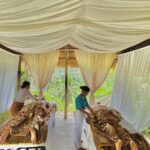
Once the monkey forest visit wraps around 2 pm, your private driver transfers you to a Balinese spa for a 2-hour treatment. The package is clear and structured: 1 hour body massage, followed by 1 hour body scrub.
This is the part that makes the full day feel balanced. Cooking can be physically tiring, and walking in a forest adds up quickly. A spa with both massage and scrub is a smart combo because it addresses muscle tension and physical tiredness, then helps you feel refreshed afterward.
The treatment is described as being done by trained therapists using products made from blended natural ingredients, pure natural oils, and herbs and spices. Whether you care deeply about the ingredient list or you just want results, the takeaway is the same: you get a traditional-style reset built into the schedule rather than something you have to chase yourself.
If you tend to get dry skin after sun and outdoor time, the body scrub is usually the most noticeable part of this kind of package. And because it’s included and timed right after the outdoor portion of the day, you can enjoy it without thinking about transportation or what to do next.
Price and value: what $135 includes and why it adds up
At $135 per person, this tour may look like a splurge if you’re comparing it to a single attraction. But it’s priced like a full program day, because it bundles several things people often pay separately for in Ubud.
Here’s what your money covers, based on the plan provided:
- Hotel pickup and drop-off
- Private vehicle transport with a private driver
- Cooking class guide and the hands-on class
- Lunch at the cooking class
- Bottled water
- Ubud Monkey Forest visit time as part of the day’s route
- A 2-hour spa treatment with both massage and body scrub
- Tour escort
That combination is what drives the value. You’re paying for guided learning plus included meals plus a major relaxation component, all wrapped into one day with transportation handled.
You’re also not stuck on a huge bus setup. The cap is 15 travelers, and the cooking class includes guide attention in a small group setting. Plus, the plan mentions group discounts, so if you’re traveling with a friend, your cost may drop.
When is this price most worth it? If you like cooking and want something more hands-on than a demo class, or if you want a reliable, “everything is organized” day that doesn’t require planning three separate activities.
When might it feel less worth it? If you’re only interested in the monkeys or only want a spa, you’ll pay for the cooking and market legs even if you don’t care about them.
Small-group structure and private components, and how they affect your day
The tour is designed with a mix of group and private elements. The cooking class is not private, but the overall tour and spa services are private. In plain terms, you will get a more personal, controlled flow with transportation and the spa, while the cooking session keeps a small group atmosphere.
This matters because it changes how you experience the day. Private transport reduces friction. You’re not waiting for a long line of strangers to board. And a private spa visit means you’re less likely to share treatment timing and logistics with random additions.
Meanwhile, the cooking class being shared is normal for market-and-kitchen instruction. With a max of 15 travelers, it should still feel guided. If you’re the type who asks lots of questions, a smaller setup helps a lot.
One more detail that’s useful for planning: the tour uses mobile ticket delivery. That’s one less thing to manage on the ground.
Who this Balinese cooking plus Monkey Forest plus spa day fits best
This is a great match for you if:
- You want a hands-on cooking class that includes an ingredient start at a market and a rice farm lesson
- You like variety in one day, food education, cultural nature, then a practical recovery spa
- You prefer your day planned with private driver logistics so you can focus on doing the activities
It’s also a good option for couples or small groups. The plan requires a minimum of 2 people per booking, so it tends to work better than a solo “hop on a random bus” style day.
If you’re traveling with someone who does not care about cooking, they might still enjoy the market and farm context and the monkey forest, and the spa is likely to be a win for just about anyone. But if your group is only into beaches and downtime, you might find this day too structured.
Should you book it? My call
Book this if you want one Ubud day that actually teaches you something and then lets you recover. The combination of market and rice farm context plus a guided class where you eat what you make is the strongest reason to choose it. Add the Sacred Monkey Forest Sanctuary with its real cultural setting and the clearly timed 2-hour spa, and you’ve got a day that feels complete.
I would only hesitate if you hate early starts or if you prefer a totally private cooking setting. In that case, you might want a different format that guarantees one-on-one instruction.
If you do book, I’d plan for a full day in Ubud: be ready for a lot of movement between stops, keep your attention on your guide during the monkey forest section, and treat the spa as part of the experience, not as an optional extra.
FAQ
What time does hotel pickup happen?
Pickup starts at 7 am from your hotel in Bali.
When do you meet the guide and visit the market?
You meet the guide at 8:30 am and explore the local or traditional market.
What happens after the market?
You meet farmers and learn how rice is grown, then you take part in an authentic Balinese cooking class.
Is lunch included?
Yes. Lunch is included as part of the cooking class.
Is the monkey forest visit included, and how long do you go?
Yes, you visit the Sacred Monkey Forest Sanctuary after the cooking class, finishing around 2 pm. The plan places the visit from about 1 pm to 2 pm.
What does the spa treatment include?
The spa package is 2 hours total: 1 hour body massage and 1 hour body scrub.
Is the cooking class private?
No. The cooking class is not private, but the tour and spa services are private.
Can I cancel for a full refund?
Yes, free cancellation is available. You can cancel up to 24 hours in advance for a full refund.
More Food Experiences in Ubud
More Food & Drink Experiences in Ubud
More Tour Reviews in Ubud

Not for you? Here's more nearby things to do in Ubud we have reviewed


Tour Reviews, compared.
 ★ 5.0All-Inclusive Ubud Private TourFrom $10014,344 reviews
 ★ 5.0Best of Ubud Full-Day Tour with Jungle SwingFrom $568,571 reviews
 ★ 5.0Monkey Forest, Jungle Swing, Rice Terrace, and Water TempleFrom $317,160 reviews
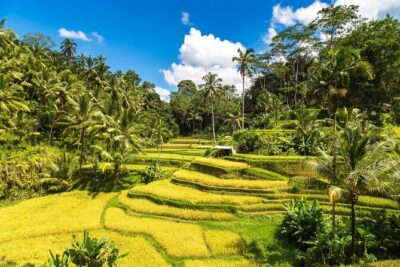 ★ 5.0Best of Ubud 1-Day Private TourFrom $544,451 reviews
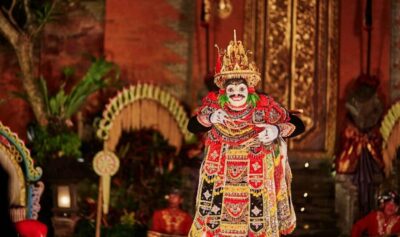 ★ 4.4Bali: Ubud Palace Legong Dance Show TicketFrom $63,979 reviews
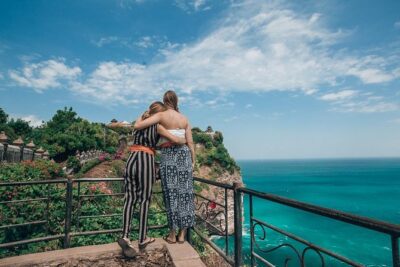 ★ 5.0Uluwatu Sunset, Kecak Dance, and Dinner Jimbaran BeachFrom $353,681 reviews
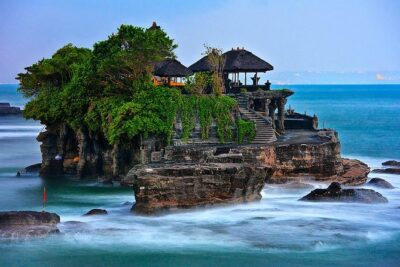 ★ 5.0Tanah Lot and North Bali Tour: Scenic JourneyFrom $1003,620 reviews
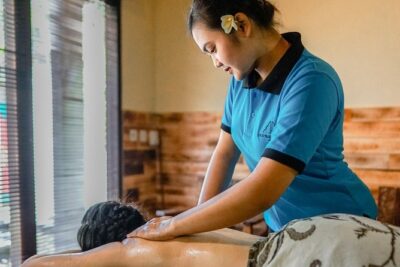 ★ 5.0Body Massage Experience in Ubud Traditional SpaFrom $213,506 reviews
Browse the lists this tour appears in