
Tour review · TOUR REVIEWS
Bali UNESCO Sites: Water Temples and Jatiluwih Rice Terrace Tour
Temples, terraces, and sunset in one day. This private tour is interesting because you pair UNESCO World Heritage water-temple scenery with the big-picture Jatiluwih rice terraces story, explained by your driver-guide. I like the personal pacing for photos and questions, and I also like that bottled water and a private air-conditioned vehicle keep the day practical. One possible drawback: the itinerary has several optional stops if time permits, so you will not necessarily see everything listed.
You start at 8:30am from the Ubud area or select south Bali locations, then you work your way from lush garden temple grounds to lake views and finally the coast at sunset. The tour is designed so the sites feel connected, not like a rushed checklist, and it is especially good when you want flexibility without spending your whole day on public transport.
Key highlights worth your attention
- Private driver-guide attention that can match your pace and photo style
- UNESCO-linked water-temple stops plus the Jatiluwih rice terrace setting in one circuit
- Strong photo planning built into the timing, especially around Ulun Danu Bratan and Tanah Lot
- A tight, efficient main route, with several optional add-ons only if the schedule allows
- Solo-friendly setup, since it is private, so one person still gets the same vehicle and guidance
- Ticket options and included entries for the main temples when you select that add-on
A private Bali UNESCO route built for real time, not bus math
If you want Bali’s famous sights without losing half your day to transfers and waiting, this is the kind of trip that makes sense. It is built around four main UNESCO-related stops, plus a menu of extra places if you have time. The big win is that your driver-guide can adjust the day as conditions change, which matters on Bali roads.
This is also a tour that respects how people actually travel. You get pickup and drop-off from a wide set of areas, and you stay in one vehicle for most of the day. That means fewer headaches, fewer timing surprises, and more time to enjoy each stop instead of reorganizing your day every hour.
You can also read our reviews of more tours and experiences in Ubud.


Pickup, timing, and how a 9.5 hour day really plays out
The tour starts at 8:30am, and the day runs about 9 hours 30 minutes. That early start is not just a schedule detail, it is a comfort factor. Temples and viewpoints are easier when you are not fighting late-morning crowds and heat.
You get pickup from Ubud or Gianyar, plus Sanur, Kuta, Legian, Seminyak, Canggu, Jimbaran, Nusa Dua, and Denpasar. With a private air-conditioned vehicle and bottled water included, the long drive time feels manageable rather than exhausting.
One practical thing to note: the “if time permits” section includes many different options, from waterfalls to a butterfly park to hot springs. That is great when things go smoothly, but it also means the day is not guaranteed to follow one exact list after the main four stops. I’d go in with two priorities: the big four, and then pick one or two extras you would most like, in case the timing works.
Taman Ayun Temple: royal water gardens and an easy first stop
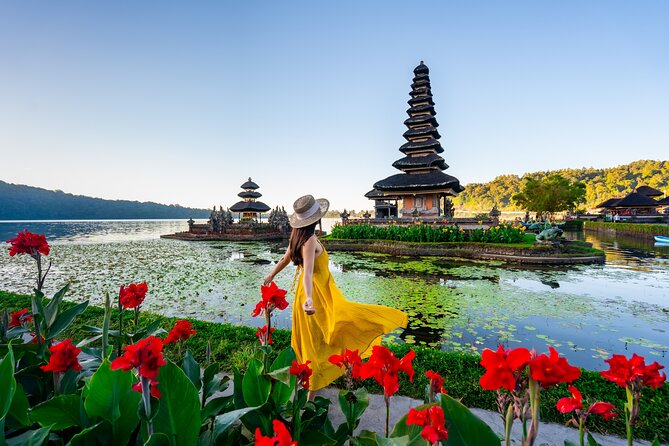
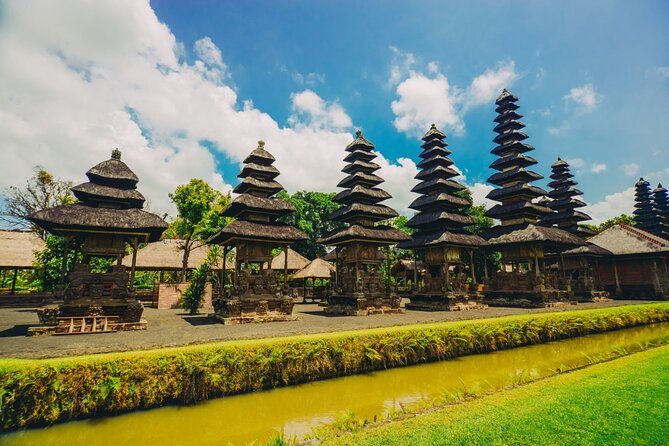
Taman Ayun Temple is your first major stop, and it sets a calm tone. It is a 17th-century temple known for its majestic pagoda-like shrine and lush green gardens, with admission included when you choose the ticket option.
This is a smart opening site because it is visually rewarding without needing a ton of effort. You can slow down early, get your bearings for the day, and start collecting photos before the road time ramps up. It is also a good place to ask your driver-guide questions about what you are seeing, because the day is still fresh and you have time to think.
If you are the type who likes to understand what you are photographing, this temple supports that. Your guide is there to explain the traditions behind the sites, and early context makes later stops click into place.
Ulun Danu Bratan Temple: the lake goddess setting that frames itself
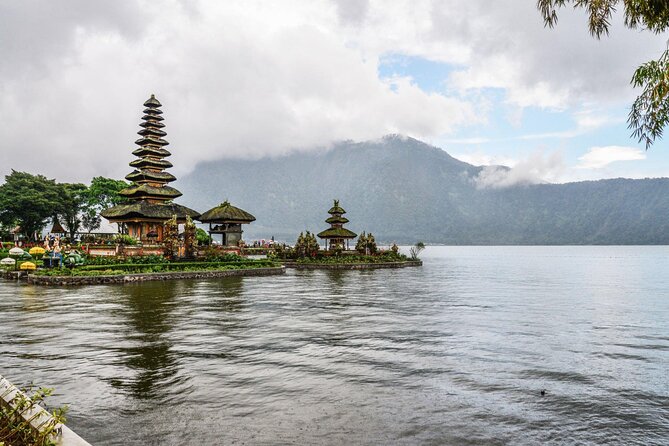
Ulun Danu Bratan Temple is the Bali water-temple moment people talk about. It sits by Lake Bratan, built in the water to worship the lake goddess Dewi Danu, with about 1 hour on site and admission included when tickets are selected.
The “floating” feel is real in photos because of how the temple and the water line up visually. You also tend to get different photo angles depending on where you stand and how you time your walking. This is one of the stops where I’d actually plan your shots instead of just taking a few and moving on, because the setting can look different from one vantage point to another.
Your driver-guide can help here in a practical way: where to stand for a clean view, and how to time your photos so you are not scrambling. In the feedback I saw, guides such as Juli, Mika, and Gede are often praised for being patient and for helping people find good picture spots and share context without rushing.
Jatiluwih Rice Terraces: UNESCO status you can see, not just read
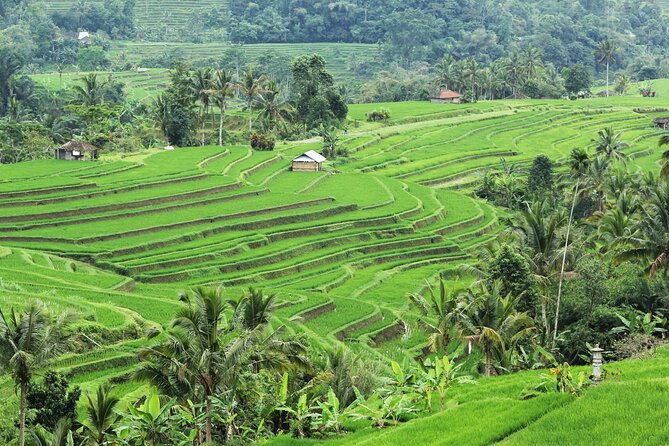
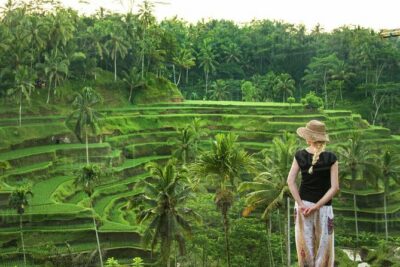
Jatiluwih Green Land is where the day turns from temples to the working visual system of Bali. You get about 1 hour here, and it is described as the largest and most picturesque expanse of paddies in Bali, with admission included when tickets are selected.
This stop is valuable for two reasons. First, the terraces themselves are the kind of view that makes you understand why people protect this area. Second, the tour is framed around Bali’s traditional irrigation system, known as subak, which holds UNESCO World Heritage status. Even if you are not reading every sign, you can sense how the water management shapes the whole scene.
A practical note: because Jatiluwih is all about the view, footwear matters. You will likely be walking uneven ground, and you will want to feel steady when you get to viewpoint areas. I also suggest you plan for slower steps here. This is not a quick photo stop if you want to actually enjoy what you came for.


Tanah Lot at sunset: the sea temple that makes the schedule worth it
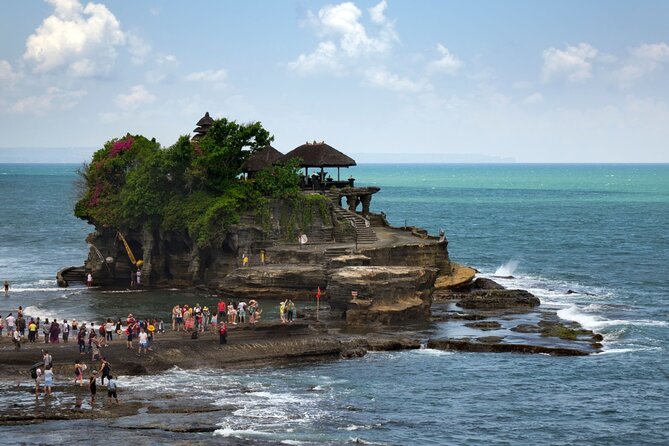
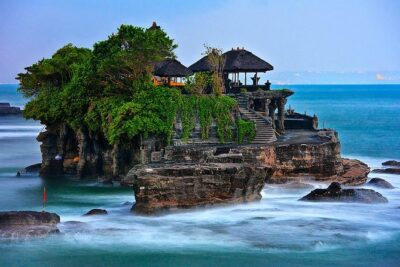
Tanah Lot is your final main stop and it is timed for the best payoff, about 1 hour 30 minutes. You are heading to a temple by the sea, an ancient shrine perched atop a rocky islet off Bali’s southeast coast, and it is widely considered one of the best places to watch the sunset.
This is where the structure of the day earns its keep. After lake and terraces, you end with ocean light, and your photos shift from greenery to dramatic coastline. If you care about golden-hour color, this is the stop where you should protect your time.
In the feedback, guides like Teget and Gede are often described as patient and helpful with picture timing, which is exactly what you want here. Sunset timing can be a little unpredictable due to clouds or crowd flow, so having someone who understands how to pace you matters.
The optional add-ons: pick what fits your mood, not the entire list
After the big four stops, the tour lists several extra options that depend on time. This is one of the most useful parts of the experience because it lets you steer your day without needing to research five separate excursions.
Here are examples of the optional stops included in the schedule if time permits, so you can decide what you would most enjoy:
- A hidden waterfall with a narrow stream flowing into a small, shallow pool
- A museum focused on preserving the ogoh-ogoh Balinese tradition
- Caldera Lakes in Baturiti next to the Ulun Danu Bratan area
- An Instagram-style photo spot
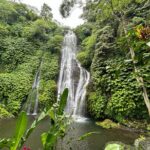
- A waterfall that cascades over a cliff through a tiny gap in the jungle
- Hot springs with scenic tropical charm
- Sekumpul waterfalls near Sekumpul village, with three different waterfalls at different heights
- A butterfly park in Bali, described as the biggest in Bali and Indonesia for preservation and breeding
- A plant collection spot with rare tropical flowering plants
- Another rice terrace and mountain view viewpoint
- A beach area suited for surfers and sunbathers
- A quiet temple with a giant sleeping Buddha
- A place described as an Edu-vacation tourism concept
- Local hot springs with public and private pools
- A waterfall around 20 meters tall
Because there are so many possibilities, you should go in with a simple plan. Decide your must-do beyond the big four, then let your driver-guide help choose among the rest based on timing. If you try to force all of them, you will just end up stressed, and that defeats the point of a private tour.
Price and value: why $38.18 can work, and when to spend extra
The price is listed at $38.18 per person, and the tour is approximately 9 hours 30 minutes. That is a solid deal for a private day, especially with pickup and drop-off across Ubud and south Bali, plus an English-speaking driver-guide who also serves as the driver.
What makes it feel fair is that you get more than a seat. The tour includes transportation by a private air-conditioned vehicle, bottled water, and parking fees. Food and beverage are not included, so you will want to plan for meals on your own, but you are not paying extra just to stay comfortable during transfers.
Tickets are the one point to watch. The tour says entry tickets are included if you select the ticket option, and the itinerary notes admission tickets included at the main stops. If you know you want to avoid ticket lines and add-on charges at each site, it usually pays to choose the option that bundles entries.
Also, this is the kind of trip many people book ahead for. It is often reserved about 25 days in advance, so if you have fixed dates and you want the early start, booking sooner is a smart move.
What makes the guides matter on this specific day
This tour lives or dies on pacing. You are moving between water temples, rice terraces, and a coastal sunset, with several “if time permits” add-ons. When your guide can read your questions, your pace, and your photo goals, the whole day feels smoother.
In the feedback, I saw a clear pattern: people liked guides who were patient and who treated questions as part of the experience. Names that come up include Juli, Mika, Teget, and Gede. They are described as careful drivers, customer-focused, and able to help with picture and video moments, not just route navigation.
So when you book, think about what you want. If you enjoy learning while you walk, this tour style can be a win. If you mostly want scenery with minimal talking, you can still benefit from the guide’s practical help with timing and where to stand.
Who should book this, and who might want a different format
This is a great fit if you want:
- A private day with fewer transit hassles
- The big UNESCO-style highlights in a single route, without public transport planning stress
- Enough flexibility to add one or two extras if timing works
- A driver-guide who can answer questions about traditions behind what you see
It might not be ideal if you hate any scheduling uncertainty. Because the itinerary includes multiple optional stops, your final list depends on time and conditions. But if you show up with the big four as your anchors, the day still works even if only one extra is added.
Solo travelers also do well here because the tour is private, so you are not squeezed into a group dynamic. In fact, one of the most common “green flags” for this kind of tour is that solo travelers are not treated like a problem to solve. You get the same vehicle and guidance.
Should you book the Bali UNESCO water temples and Jatiluwih rice terrace tour?
Yes, I would book it if you want a structured but not rigid day. The main route makes sense, and it hits the best visual contrast Bali offers in one sweep: royal water-garden temple, lake-temple setting, rice terraces, then ocean sunset at Tanah Lot.
Choose it when you value convenience, want a guide who can explain what you are seeing, and you are happy to trade a little spontaneity for efficiency. My only “don’t rush” advice is to pick your priorities for the optional add-ons so you do not end the day chasing everything.
If that sounds like your style, this is the kind of tour that turns a long day into an easy one.
FAQ
What time does the tour start?
The tour starts at 8:30am.
How long is the Bali UNESCO water temples and Jatiluwih rice terrace tour?
It runs about 9 hours 30 minutes.
Where do pickup and drop-off happen?
Pickup and drop-off are offered for Ubud and Gianyar, Sanur, Kuta and Legian, Seminyak, Canggu, Jimbaran, Nusa Dua, and Denpasar.
Is this tour private?
Yes, it is private, so only your group participates.
Is bottled water included?
Yes, bottled water is included.
Are admission tickets included?
Entry tickets are included if you select the option that includes tickets. The itinerary also notes admission tickets included for the main listed stops.
Is food included in the price?
No. Food and beverage are not included, so you will need to buy meals separately.
Does the tour use mobile tickets?
Yes, the tour includes a mobile ticket.
What is the cancellation window?
Free cancellation is available up to 24 hours before the experience’s start time for a full refund.
More Tours in Ubud
More Tour Reviews in Ubud
Not for you? Here's more nearby things to do in Ubud we have reviewed







Tour Reviews, compared.
 ★ 5.0All-Inclusive Ubud Private TourFrom $10014,344 reviews
 ★ 5.0Best of Ubud Full-Day Tour with Jungle SwingFrom $568,571 reviews
 ★ 5.0Monkey Forest, Jungle Swing, Rice Terrace, and Water TempleFrom $317,160 reviews
 ★ 5.0Best of Ubud 1-Day Private TourFrom $544,451 reviews
 ★ 4.4Bali: Ubud Palace Legong Dance Show TicketFrom $63,979 reviews
 ★ 5.0Uluwatu Sunset, Kecak Dance, and Dinner Jimbaran BeachFrom $353,681 reviews
 ★ 5.0Tanah Lot and North Bali Tour: Scenic JourneyFrom $1003,620 reviews
 ★ 5.0Body Massage Experience in Ubud Traditional SpaFrom $213,506 reviews
Browse the lists this tour appears in