
Tour review · TOUR REVIEWS
Bali Traditional Village Experience
This is a short hop north of Ubud, but the day feels local from the start. You visit a real family compound in Taro village, learn how Balinese Hindu offerings work, and end with a holy-water blessing ceremony you can participate in if you want to get wet.
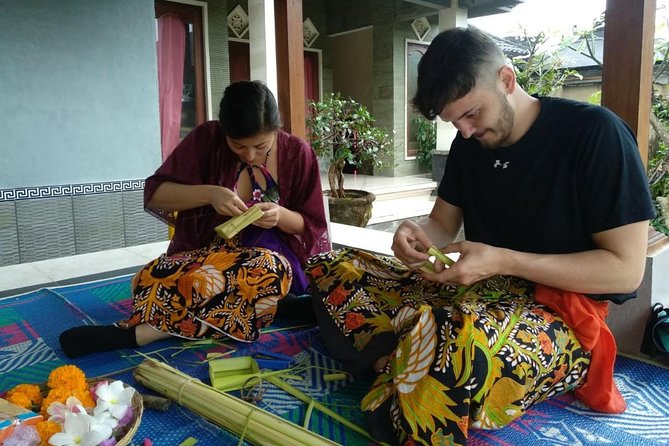
I love the practical, hands-on way the morning flows. You’re taught to make Canang Sari offerings, you share morning tea in the compound, and you taste simple local snacks instead of doing a fast look-and-leave photo stop.
One thing to consider: the holy-water temple has an additional entrance fee or donation you pay in cash on site, and there’s no lunch included. Bring a little extra buffer to avoid getting hungry after the ceremony.
Key Things That Make This Worth Your Time
- Private family-compound experience focused on everyday Balinese life, not just temples
- Canang Sari offering-making taught during a morning tea visit
- Sacred holy-water blessing with sarong and sash required
- Optional cleansing ritual where you may change into swimwear or wet clothes
- 2-way private transfers from Ubud to keep logistics easy
- What you eat is local (Bali cookies plus tea or coffee)
From Ubud to Taro: A Quick Trip With a Big Atmosphere Shift
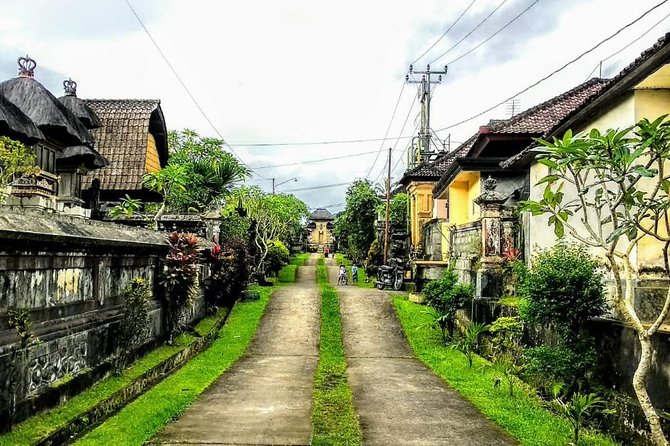
Taro sits about 12 miles (18 kilometers) north of Ubud, and that distance matters more than you might expect. In a lot of Bali experiences, the “culture” part is mostly staged. Here, the whole point is to slow down inside a village that still runs on family routines, worship schedules, and home shrines.
The tour is designed around a simple rhythm: you start with a pickup in the Ubud area and head out to the meeting point area near Taro and Tegallalang. From there, the day is led by a local host who brings you through a traditional family compound and explains how the space works. You’re not wandering around on your own trying to guess what you’re looking at.
Also, the tour is only about 2 hours, which I appreciate. It’s long enough to learn a real skill (offering-making) and take part in the ceremony, but short enough that you can still enjoy the rest of Ubud afterward. For $35 per person, that time plus the included transfers is where the value starts to make sense.
You can also read our reviews of more tours and experiences in Ubud.


Morning Tea at a Family Compound, Plus How the Home Shrines Work
Your day begins with a driver pick-up, then you’re brought into the family compound in Taro. The focus is on daily life and how the compound is set up, including where different family members live and how the family temple fits into everyday routines.
This is the part I think makes the experience feel more authentic than a typical stop-and-walk tour. Instead of only seeing religious architecture from the outside, you get context: why offerings happen, why certain areas matter, and how the family temple is part of normal life rather than an isolated “sight.”
You’ll enjoy a traditional Balinese morning tea with the family in the compound. That’s not just a “nice touch.” In Bali, food and drink often mark the start of a relationship. You sit, you listen, and you get comfortable before you start learning the offering process.
If you’re someone who learns best by doing, this setup helps. You’re more likely to understand the ritual steps when you’re not rushing from one viewpoint to another. And because it’s private, only your group is participating, so the guide can adjust the pace to questions.
Canang Sari Offering-Making: The Skill That Gives You Real Understanding
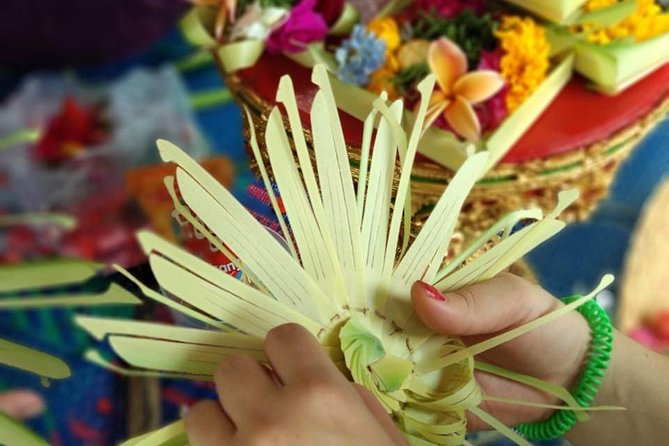
The heart of the morning is learning how to make Canang Sari Balinese Hindu offerings. These are small, carefully made offerings used in daily worship. You’re taught how to create them in the compound setting, where you also learn what they’re for and when they’re used.
What I like about this is that it’s specific. A lot of cultural tours give you a vague “this is important” explanation. Here, you’re making something with your hands. That turns the visit from passive watching into actual comprehension.
A few practical tips that can help:
- Go slowly with the assembly steps. If you rush, the offering won’t look as neat, and you’ll spend the rest of the session fixing it.
- Expect lots of little adjustments. Offering-making can be more precise than it looks.
- Ask what each part is for. Even if you’re not fluent, the guide can usually explain the role of each piece.
Once you make your offerings, you’ll bring that work forward into the blessing ceremony later in the day. That linkage makes the morning feel purposeful instead of like a standalone craft lesson.
The Sacred Holy Water Site: Sarong, Sash, and the Blessing Ceremony
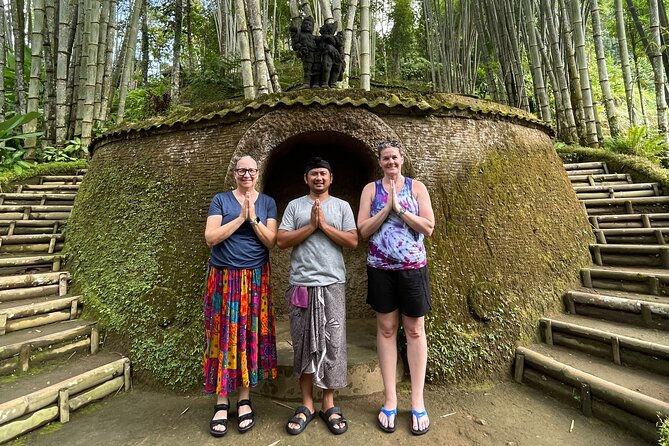
After the offering lesson, you head to a sacred holy water site for a traditional Hindu blessing. This is where the tour shifts from learning to participation.
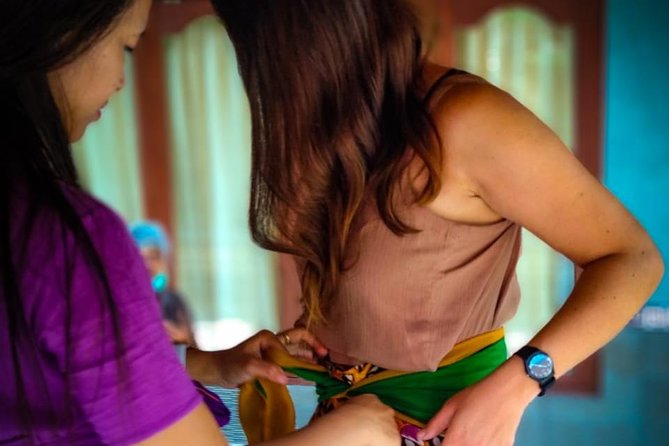
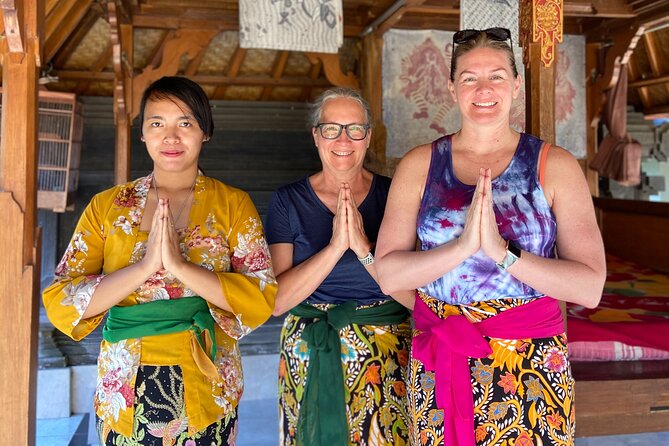
At the site, you’ll have a chance to change into swimwear or clothes that may get wet if you choose to do the cleansing ritual. The guide will dress you with a sarong and sash, which are mandatory for entering the site. Plan your comfort around that. This is not the place to wear anything you don’t mind getting adjusted for the ritual.
Also, the offerings you made earlier are used during your blessing ceremony. You receive a Hindu blessing with holy water, guided by the ceremony flow.
The ceremony itself is meant to be respectful and simple. You don’t need to treat it like a performance for your camera. If you want good memories, focus on the moment, follow instructions, and let the ritual take the lead.
One more important practical note: the holy-water temple requires a cash entrance ticket or donation that is not included. Bring small bills or the cash amount your guide asks for when you arrive, so you don’t get stuck in a last-minute payment scramble.
What’s Included, What’s Not, and How to Plan Your Budget
This tour is priced at $35 per person, which is refreshingly straightforward for a private experience. Here’s what you get:
- Snacks, including Bali cookies
- Sarong (provided for the holy-water site)
- Coffee and/or tea
- A private experience with only your group
- 2-way private transfers from your Ubud area address
What costs extra:
- The entrance ticket/donation at the holy water temple, paid in cash
- Lunch (not included)
For value, here’s how I’d think about it. If you were to hire a driver for a couple hours and pay for a guide time, you’d likely spend a big chunk of the price range just on transportation and labor. What makes this feel fair is that your money also buys you a structured, culturally grounded visit with food included and a guided ceremony connection to the offering you made that morning.
Still, don’t ignore the lunch gap. If you finish the tour and feel hungry, that’s normal. Plan either a light snack buffer before you go, or a proper meal afterward in Ubud.




Timing, Meeting Point, and the Smoothest Way to Day-Plan
The activity is about 2 hours (approx.) and uses a mobile ticket. Confirmation is received at booking, and the tour ends back at the meeting point listed by the operator.
The meeting point information includes Delodsema Traditional Village, Tegallalang (with the address in Taro, Tegallalang). At the same time, the tour description emphasizes 2-way private transfers from your Ubud area address, so the most useful way to plan is to assume pickup is arranged for you in Ubud, then you’ll meet at the local meeting point area for the start of the village portion.
If you have another activity after this, schedule it with some slack. Village mornings can run by local rhythm, and you’ll want time to change, settle, and get back without feeling rushed.
Also, since the average booking time is about 50 days in advance, if you’re traveling in peak season, don’t wait until the last minute. The private nature and short duration can make certain slots fill up.
Clothing and Comfort: What to Wear for Offerings and Holy Water
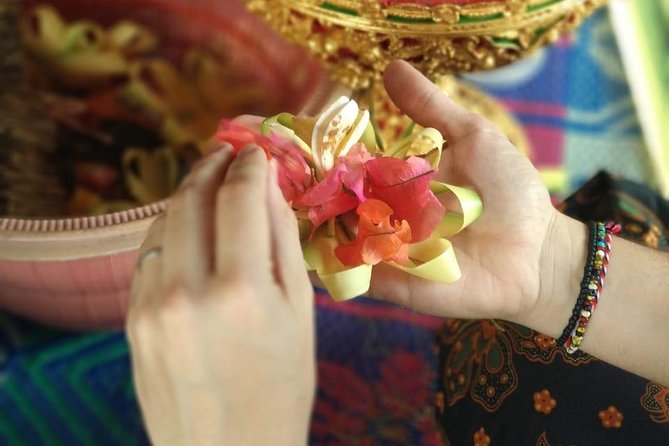
This is the kind of tour where what you wear matters, but it’s manageable with a little planning.
- You’ll get dressed in a sarong and sash for the holy-water site, and you may change into swimwear or wet clothes if you choose to join the cleansing ritual.
- Wear something comfortable for walking and time inside a family compound.
- Bring a plan for your belongings. If there’s a chance you get wet, you’ll want a safe place for your phone, wallet, and extras.
Even though the sarong is provided, wear clothes that are easy to adjust around. You don’t need to dress fancy. In a traditional village setting, comfort and respect go farther than style.
Who This Tour Fits Best
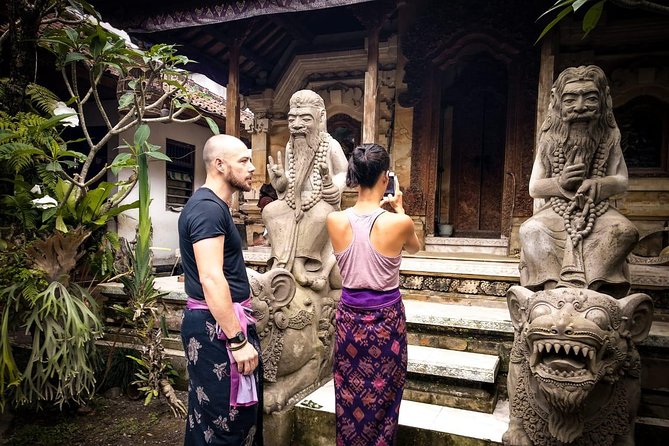
This works especially well if:
- You want a private cultural experience with a real connection to a family setting
- You enjoy hands-on learning, like making offerings rather than just watching
- You’re interested in Balinese Hindu practices and want context from the people who live it
- You want an easy, logistics-light add-on while staying in the Ubud area
It might not be the best match if you’re looking for a full-day adventure with lots of different stops and long driving time. This is purposely short. You get depth in a focused slice of the day, not a big highlight parade.
Should You Book the Bali Traditional Village Experience in Taro?
I think you should book this tour if you want a meaningful, family-centered window into Balinese Hindu life without spending your whole day on the road. For the price, the big wins are the private transfers from Ubud, the hands-on Canang Sari lesson, and the fact that your offerings are actually used in the holy-water blessing.
Also, the feedback is strong, with a 4.9 out of 5 rating from 18 reviews and a 100% recommendation rate. That tracks with what the structure promises: real instruction, not just sightseeing.
One last decision helper: if you’re willing to pay a small cash donation at the holy-water site and you’re fine eating after, this is a very “doable” experience. If you’re strict about having everything included, factor in the additional temple payment and plan a meal.
If you want a calm, respectful, hands-on Bali day that feels genuinely local, this is a smart pick.
FAQ
Is the Taro village experience private?
Yes. It’s a private tour/activity where only your group participates.
How long is the tour?
It runs for about 2 hours (approx.).
What do I need to pay for at the holy water temple?
An entrance ticket or donation at the holy water temple is not included and is payable in cash.
What is included with the ticket price?
The tour includes snacks (Bali cookies), coffee and/or tea, and a Balinese sarong.
Do I need to bring swimwear?
You can change into swimwear or clothes that may get wet if you want to do the cleansing ritual, but you can decide based on your comfort.
What is the cancellation policy?
You can cancel for a full refund up to 24 hours in advance of the experience start time. If you cancel less than 24 hours before, the amount paid is not refunded.
More Tour Reviews in Ubud
Not for you? Here's more nearby things to do in Ubud we have reviewed






Tour Reviews, compared.
 ★ 5.0All-Inclusive Ubud Private TourFrom $10014,344 reviews
 ★ 5.0Best of Ubud Full-Day Tour with Jungle SwingFrom $568,571 reviews
 ★ 5.0Monkey Forest, Jungle Swing, Rice Terrace, and Water TempleFrom $317,160 reviews
 ★ 5.0Best of Ubud 1-Day Private TourFrom $544,451 reviews
 ★ 4.4Bali: Ubud Palace Legong Dance Show TicketFrom $63,979 reviews
 ★ 5.0Uluwatu Sunset, Kecak Dance, and Dinner Jimbaran BeachFrom $353,681 reviews
 ★ 5.0Tanah Lot and North Bali Tour: Scenic JourneyFrom $1003,620 reviews
 ★ 5.0Body Massage Experience in Ubud Traditional SpaFrom $213,506 reviews