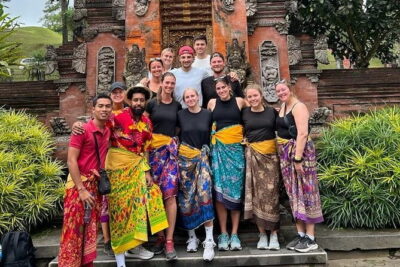
Authentic Balinese Cooking Class in Ubud

Tour review · TOUR REVIEWS

Authentic Balinese Cooking Class in Ubud

5.0 · 46 reviews From $49 Operated by Bali Natural Tours · Bookable on Viator
Book on Viator →

A half-day food adventure beats another dinner reservation. In small groups, you get hands-on instruction, plus choice of departure times so you can fit it neatly into your Ubud day. The setting is also a big part of the feel, the class is on the west side of Ubud in a greener, more countryside atmosphere than the center.

I also like that the learning is practical, not just watch-and-cheer. You start by deciding your menu, then you head to the farm to gather fresh ingredients and spices, and later you cook with techniques that are central to Balinese flavor.

One key consideration: the traditional market and spice buying are morning class only, so afternoon departures skip that extra stop.

Key Things You’ll Really Notice

Authentic Balinese Cooking Class in Ubud - Key Things You’ll Really Notice

  • Small group format (max 15) makes it easier to ask questions and cook at your own pace.
  • Market morning option adds a spice-buying walk before you cook.
  • Farm harvest included so you use ingredients you helped pick.
  • Traditional spice grinding with lesung (mortar and pestle) is part of the lesson.
  • Vegetarian and regular menu choices are available during the class.

Entering a Real Balinese Cooking Rhythm, Not a Script

This is a proper Balinese cooking class in Ubud, structured around how food is actually made, not just how it is presented for tourists. You are not trapped in a kitchen the whole time. You move through a sequence that starts with local life, continues into the ingredients, then finishes with cooking, eating, and taking the recipe home.

The course runs about 5 hours with lunch included, which makes it a strong use of a morning or early afternoon. And because it is small-group, you are more likely to get direct help with chopping, grinding, and cooking steps rather than being politely waved through.

One of the best values here is that the class is built around real technique. Balinese cooking leans on spice pastes and aromatic combinations. You get taught the “how,” including working with fresh ingredients and grinding spice mixes the traditional way.

You can also read our reviews of more cooking classes in Ubud

West Ubud Pickup and a Calm, Green Start

Authentic Balinese Cooking Class in Ubud - West Ubud Pickup and a Calm, Green Start
Your day begins with pickup and drop-off in the Ubud area, using an air-conditioned vehicle. That matters more than it sounds. When you are in Ubud, traffic and short distances can still eat time, and this keeps your day organized.

The cooking location is on the west side of Ubud, described as surrounded by green areas and with a countryside feel. If you are trying to balance Ubud’s temple circuits and rice-terrace views, this stop can feel like the decompression period. It is not just scenic for photos, it also tends to make the hands-on work feel less rushed.

If you are staying outside the Ubud area, you should know there are extra vehicle fees for certain locations like Sanur, Kuta, Seminyak, Canggu, Nusa Dua, Jimbaran, and Uluwatu. If you are close to central Ubud, you are likely to get the cleanest value.

The Morning Market Stop, What You Gain and What You Skip

Authentic Balinese Cooking Class in Ubud - The Morning Market Stop, What You Gain and What You Skip
If you book the morning class, you get a lively add-on: a traditional market visit where you can buy spices from locals. This is one of the reasons this class is popular, because it turns “spices” from a vague concept into ingredients you actually pick with context.

You also learn how to think like a cook. When you shop for aromatics yourself, you notice things like texture, strong versus mild profiles, and which spices look fresh enough to matter. Later, when you grind and combine them, you have a better mental map of what you are building.

If you choose another departure time, the market stop may not be part of your day. So if the market is your top priority, you will want to plan around the morning option.

Visiting a Balinese Home, Culture You Can See

Authentic Balinese Cooking Class in Ubud - Visiting a Balinese Home, Culture You Can See
After the market portion (morning only), the day continues with a visit to a local house. This is where you get a closer look at Balinese culture and daily life, including how the home is set up and how people place buildings in relation to the property.

This kind of stop is often where cooking classes either feel authentic or feel like a sideshow. Here, the emphasis is on understanding the living setting, not just snapping a few pictures and moving on. You may also encounter ceremonies when timing aligns, and that can add a real sense of how family life and ritual are woven together.

Even if you do not catch a ceremony, the layout and daily rhythm still gives you context. It is easier to appreciate the food later because you understand it as part of the same worldview, not just a recipe from a cookbook.

Farm-to-Ingredient Prep: Harvest, Then Choose Your Menu

Authentic Balinese Cooking Class in Ubud - Farm-to-Ingredient Prep: Harvest, Then Choose Your Menu
Next comes the farm, where the class starts in earnest. Before you cook, you decide on the menu you will prepare. Then you explore the farm and harvest the spices you will use during the session.

This step is more than a feel-good activity. Using freshly harvested ingredients changes the outcome of spice pastes and sauces. You can taste the difference when herbs and aromatics are handled at their peak rather than treated as pre-dried or pre-processed.

It also makes the whole class flow better. Once you have physically picked what you are about to cook with, you pay closer attention to how the chef combines flavors and why certain steps happen in a certain order.

A few more Ubud tours and experiences worth a look

Cooking with Lesung: The Hands-On Part

Authentic Balinese Cooking Class in Ubud - Cooking with Lesung: The Hands-On Part
Now you get to the part most people came for, the actual cooking. Your Balinese chef demonstrates the techniques with fresh ingredients, and you learn the methods used in Balinese-style cooking.

A standout skill is working with lesung, the mortar-and-pestle tool used for grinding spice pastes. Chopping and pounding spices can feel slow, but it is the core of the flavor. Grinding helps release oils and thickens pastes so they cling to proteins and vegetables.

The chef also explains the cooking process step by step, including what ingredients you will use and what else you need based on the menu choice. There are vegetarian and regular menu options, so you can match the class to your diet without losing the authenticity of the approach.

What I like most is that you are not only watching. You learn through the process, and because the group stays under 15 people, your questions are more likely to get answered in real time.

What You Eat and Why Lunch Is Part of the Deal

Authentic Balinese Cooking Class in Ubud - What You Eat and Why Lunch Is Part of the Deal
Lunch is included, and that is not filler. In a good cooking class, the meal is the proof of what you learned. Here you cook and then eat what you made, which helps you understand which flavors you nailed and which techniques you might want to practice at home.

You also get bottled water during the experience. Coffee and/or tea are included as well, which is a nice reset after grinding spices and working over a hot cooking area.

The class also gives you a recipe in a PDF format. That matters if you want to recreate at least the basic spice combinations later, even if you are shopping with different ingredients back home.

Tools, Utensils, and the Stuff You Actually Need

Authentic Balinese Cooking Class in Ubud - Tools, Utensils, and the Stuff You Actually Need
Practical matters are covered. You receive:

  • A cooking utensil set for the class
  • An apron
  • A recipe PDF you can take home

You are also in an air-conditioned vehicle for transfers, which is a relief in Ubud’s heat, especially if you are doing this as your main activity and not hiding indoors between stops.

If you are the type who likes to cook again later, the combination of apron, utensils, and recipe PDF is a solid package. It is not just an experience, you get something usable afterward.

Price and Value: Is $49 a Fair Deal?

At $49 per person, this sits in a midrange price zone for Ubud cooking classes. The key question is what you get beyond the kitchen.

Here you are paying for:

  • Pickup and drop-off in the Ubud area
  • Lunch, plus coffee and/or tea and bottled water
  • Entry to a local house visit
  • A farm harvest component
  • Hands-on cooking instruction with traditional techniques like grinding spice pastes
  • A recipe PDF

For many people, the value comes from how many distinct moments you get in a single half-day. If you tried to piece together market shopping, guided cultural context, and a cooking lesson separately, you would likely end up spending more in both money and time.

The one cost to factor in is that some areas outside Ubud have extra pickup fees. If you are far from Ubud center, your effective cost may creep up.

Who This Balinese Cooking Class Fits Best

This is a strong match if you want a real taste of Balinese cooking with cultural context, not just a tourist cooking show.

You’ll probably love it if:

  • You want hands-on lessons, including lesung grinding
  • You want market and spice buying included, by choosing the morning option
  • You want a small-group experience that makes it easier to interact with the chef and driver
  • You want lunch and a recipe to take home

You might want to compare other options if:

  • You prefer a purely relaxing activity with zero market or farm time
  • You are strict about timing for the market stop and plan around only afternoon slots

How to Set Yourself Up for a Smooth Day

A few things make this type of class easier and more enjoyable.

First, pick your departure time based on your priorities. If you care about seeing a traditional market and buying spices, go for the morning option. If you are doing temple tours earlier, you might want an alternate start time, but accept that the market portion is not listed for those departures.

Second, expect hands-on spice work. Your clothes can get dusty or smell like spices afterward. Wear something comfortable that you do not mind for a few hours.

Third, ask questions during the home and transport segments. Some of the most memorable parts of this class type come from learning culture in everyday language, not just in cooking terms.

Finally, eat with attention. The point is to notice which flavors come from grinding, which come from fresh aromatics, and which come from the final cooking steps.

Should You Book Bali Natural Tours in Ubud?

If you want an authentic Balinese cooking class in Ubud with real ingredient prep, small-group instruction, and actual cultural context, I think this is a smart booking.

It is especially worth it if you like food that starts with spices, because you are taught the techniques that make Balinese flavors distinct, including spice grinding with lesung and cooking with ingredients you harvest on the farm. Add the included lunch and recipe PDF, and the value feels practical, not gimmicky.

My only hesitation is the timing piece. If your must-do is the traditional market, you will want the morning departure. Choose the wrong time and you may feel like you missed a key highlight.

FAQ

How long is the Balinese cooking class in Ubud?

The experience lasts about 5 hours.

Is pickup included?

Yes. Pickup and drop-off in the Ubud area are included, with extra fees for some areas outside Ubud.

Do I get a chance to visit a traditional market?

A traditional market visit and spice buying are included with the morning class only.

Is lunch included?

Yes. Lunch is included, along with bottled water and coffee and/or tea.

Can I choose a vegetarian menu?

Yes. There is variety of menu options, including vegetarian and regular menus, which you choose during the class.

What’s included in the cooking materials?

The class includes cooking utensils and an apron, plus a recipe PDF afterward.

How large is the group?

The class has a maximum of 15 travelers.

Is there free cancellation?

Yes. You can cancel for a full refund up to 24 hours before the experience start time.

What happens if the weather is bad?

This experience requires good weather. If it is canceled due to poor weather, you will be offered a different date or a full refund.